





Bank accounts during probate are reviewed, identified, and managed according to legal authority, account ownership, and probate procedure. Access to funds does not automatically transfer after a person passes away. Financial institutions usually require documentation before any estate-related decisions can be made.
When a person dies, banks may temporarily restrict access to certain accounts until authority is confirmed. What happens next depends on how the account was titled, whether beneficiaries were named, and whether probate is required.
Some accounts pass outside probate. Others become part of the estate and must be handled through the probate process.
Why Banks Restrict Bank Accounts During Probate
Banks have legal responsibilities when notified that an account holder has passed away.
Financial institutions may freeze individual accounts temporarily to prevent unauthorized withdrawals or transfers. This helps protect estate assets while ownership and authority are reviewed.
In many situations, the bank will request:
- A death certificate
- Court appointment documents
- Identification for the executor or personal representative
- Probate-related paperwork
Until those documents are reviewed, access to funds may be limited.
For additional background, see What Is Probate and How Does It Work?
Which Bank Accounts May Avoid Probate
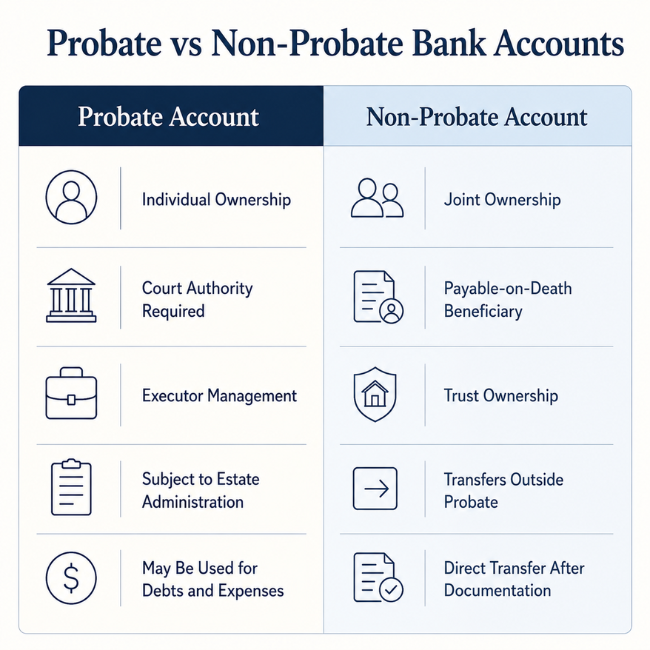
Not all bank accounts go through probate.
Some accounts transfer automatically depending on ownership structure or beneficiary designations.
Examples may include:
- Joint bank accounts
- Payable-on-death (POD) accounts
- Trust-owned accounts
In these situations, the funds may transfer directly to the surviving owner or named beneficiary after required documentation is provided.
However, rules can vary depending on state law, account structure, and financial institution requirements.
When Bank Accounts Become Part of the Estate
Bank accounts held only in the deceased person’s name often become part of the probate estate.
This means the account may be reviewed as part of estate administration and managed by the court-appointed executor or personal representative.
Estate funds may later be used for:
- Valid debts
- Taxes
- Administrative expenses
- Property maintenance
- Distribution to beneficiaries
The executor cannot treat estate funds as personal money.
For related guidance, see Executor Financial Responsibilities: Mistakes to Avoid
Who Can Access Estate Bank Accounts
Authority over estate accounts usually begins only after probate appointment.
Before court appointment, even close relatives may not have legal authority to access estate funds.
Once appointed, the executor or personal representative may be able to:
- Communicate with financial institutions
- Open an estate bank account
- Gather estate funds
- Pay approved estate obligations
- Maintain financial records
Financial decisions must follow probate procedure and fiduciary duty.
For additional explanation, see What Is the Probate Bank Account Process?
Why Financial Documentation Matters
Probate administration depends heavily on documentation.
Bank statements, transaction history, beneficiary records, tax information, and account ownership records may all become important during probate.
Incomplete records can create delays.
Financial documentation may also become necessary if:
- Creditor claims appear
- Account ownership is disputed
- Large withdrawals occurred before death
- Multiple heirs are involved
- Taxes must be reviewed
Proper records help support accurate estate administration.
Common Misunderstandings About Bank Accounts During Probate
Several misunderstandings appear frequently during probate administration.
One common misunderstanding is that family members automatically gain access to accounts after death. In reality, probate authority often must be established first.
Another misunderstanding is that all accounts automatically go through probate. Some accounts transfer outside probate depending on ownership and beneficiary structure.
Some also believe executors can use estate money freely. Estate funds must be managed according to probate rules and financial obligations.
For related information, see How probate decisions are made
What May Delay Access to Estate Funds
Several factors may delay access to bank accounts during probate.
These may include:
- Missing documentation
- Unclear account ownership
- Probate court delays
- Beneficiary disputes
- Creditor claims
- Tax complications
- Problems locating financial records
In some estates, financial review may take significant time before distributions can occur.

For additional timing information, see How Long Does It Take to Receive Inheritance?
Procedural Summary
Bank accounts during probate are reviewed according to legal authority, account structure, and probate procedure.
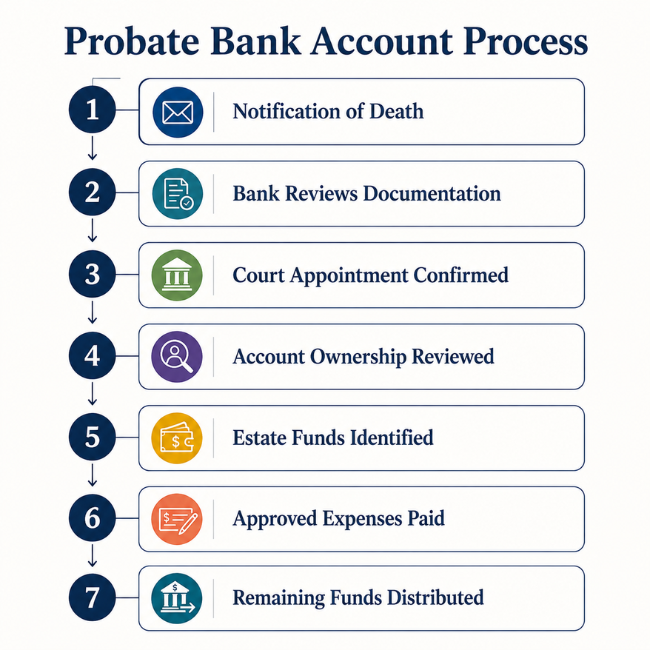
The general process often includes:
- Notification of death to the financial institution
- Review of account ownership and beneficiaries
- Court appointment of the executor or personal representative
- Submission of probate documentation
- Identification and management of estate funds
- Payment of approved estate obligations
- Distribution of remaining funds according to probate law
Access to estate funds is governed by legal authority and financial procedure rather than informal family arrangements.
This explanation is provided for general informational purposes only and does not constitute legal or financial advice.