





Executor Stress During Probate
Executor stress often begins soon after a death and can continue throughout the probate process. Executor stress during probate develops as legal duties, financial decisions, and family responsibilities unfold at the same time. The role carries authority, but it also carries pressure.
Many executors serve for the first time. At the same time, they may be managing grief, family expectations, and unfamiliar administrative tasks.
What Is Executor Stress?
Executor stress refers to the emotional and administrative strain that can arise while managing an estate. An executor, also called a personal representative, is responsible for carrying out the legal and financial steps required by probate.
These responsibilities may include:
- Identifying estate assets
- Contacting financial institutions
- Reviewing debts
- Managing property
- Communicating with beneficiaries
- Responding to court notices
Each task requires attention and organization. When combined, they can create sustained pressure over time.
Executor stress during probate often develops gradually rather than from a single event.
Legal Responsibilities and Decision-Making
The executor has fiduciary duties. This means decisions must be made carefully and in the best interest of the estate.
The executor may need to:
- Open and manage an estate bank account
- Review creditor claims
- Track incoming and outgoing funds
- Preserve estate property
- Maintain accurate financial records
Many of these decisions must be made while important information is still being gathered. Deadlines may exist. Court procedures must be followed.
Executor stress can increase when responsibilities require action before full clarity is available.
For related guidance, see Executor Financial Responsibilities: Mistakes to Avoid
Financial Oversight and Accountability
Executor stress during probate may also arise from financial oversight responsibilities.
The executor must ensure that:
- Estate funds are kept separate from personal funds
- Debts are paid in the correct legal order
- Expenses are documented
- Distributions are not made too early
Errors in financial handling can delay probate or create additional complications. Even small mistakes can require correction.
The weight of financial accountability can contribute significantly to executor stress.
For additional information, see Which Debts Get Paid First in Probate?
Communication with Beneficiaries
Executor stress is not limited to paperwork. Communication plays a major role.
Beneficiaries may request updates. Some may want distributions sooner. Others may question decisions about property or expenses.
The executor becomes the central point of contact for the estate.
Even in cooperative families, regular communication requires time and emotional energy. In estates with disagreement, stress may increase.
Executor stress during probate often reflects this combination of responsibility and expectation.
Delays and Procedural Timelines
Probate does not always move quickly. Delays may occur because of:
- Court scheduling
- Required waiting periods for creditor claims
- Documentation review
- Property valuation
- Tax filings
Executors may feel responsible for delays even when the delay is procedural.
Understanding that probate follows a defined legal sequence can clarify why timing is not always within the executor’s control.
Executor stress during probate may increase when court schedules, documentation reviews, or creditor waiting periods extend the process.
Ongoing Administrative Demands
Executor stress during probate may also develop from repetitive administrative duties that extend over months.
These may include:
- Maintaining transaction records
- Tracking estate expenses
- Responding to legal correspondence
- Coordinating with professionals
- Managing estate property
Probate often requires sustained attention. It is not a single event but a series of steps carried out over time.
This extended responsibility contributes to the overall experience of executor stress.
Emotional and Administrative Overlap
Many executors are also processing personal loss while managing probate. Legal structure continues even when personal adjustment is ongoing.
Executor stress during probate may arise from this overlap.
The probate process follows formal rules. Emotional responses do not follow a fixed timeline.
An executor may be making financial decisions while also adjusting to changes in family structure and routine.
Recognizing this overlap does not change legal duties. It explains why the role can feel heavier than expected.
Maintaining Structure and Clarity
Executor stress may feel reduced when responsibilities are approached in sequence.
The probate process generally moves through defined stages:
- Court appointment
- Asset identification
- Debt review
- Distribution after obligations are satisfied
Maintaining organized records and following procedural steps one at a time may help keep administration clear.
Executor stress does not mean failure. It reflects the weight of responsibility assigned during probate.
Key Point
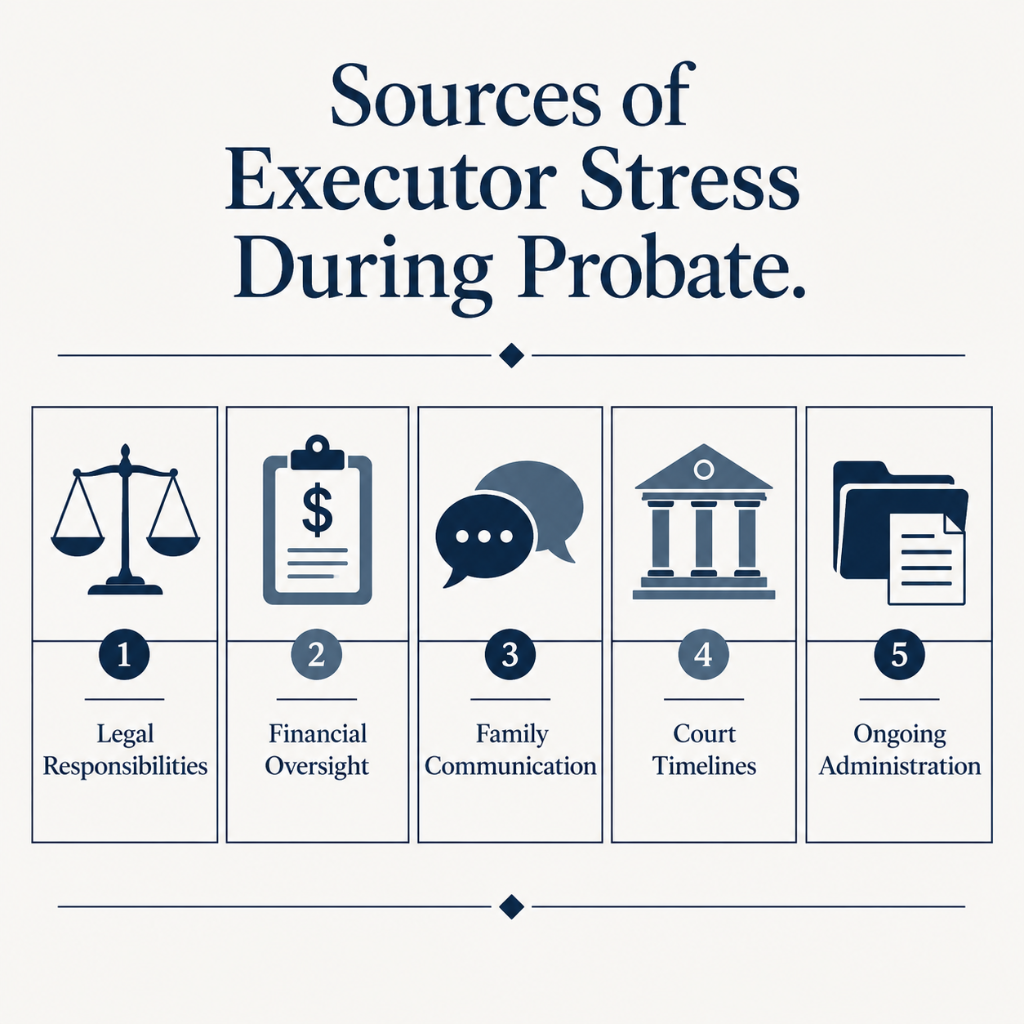
Executor stress during probate develops from legal responsibility, financial oversight, communication demands, and extended administrative duties.
The executor role carries structured obligations under court supervision. While probate follows defined procedures, the experience of managing those procedures can involve sustained pressure.
Understanding the sources of executor stress clarifies why the role may feel demanding even when the steps themselves are structured.
This article is provided for general informational purposes only and does not constitute legal or financial advice. Laws vary by state.