





How long does it take to receive inheritance? The timing of inheritance distribution depends on the probate process, estate complexity, and legal obligations that must be completed before assets are transferred.
Inheritance is not distributed immediately after death. Probate law requires a structured process that ensures debts, taxes, and legal obligations are addressed before remaining assets are released to heirs.
Understanding the typical sequence of probate administration helps explain why inheritance distribution often takes several months or longer.
Definition: What Inheritance Distribution Means
Inheritance distribution refers to the transfer of estate assets to heirs after all probate requirements have been satisfied.
Before heirs receive inheritance, the personal representative must complete several responsibilities:
- locate and secure estate assets
- notify creditors and interested parties
- evaluate creditor claims
- pay lawful debts and taxes
- prepare an accounting of estate activity
Only after these steps are completed can the remaining estate assets be distributed.
For a detailed explanation of the responsibilities that affect this timing, see Executor Responsibilities During Probate
Why Inheritance Is Not Distributed Immediately
Many heirs expect inheritance to be available shortly after the funeral. However, probate law requires a waiting period before any distributions occur.
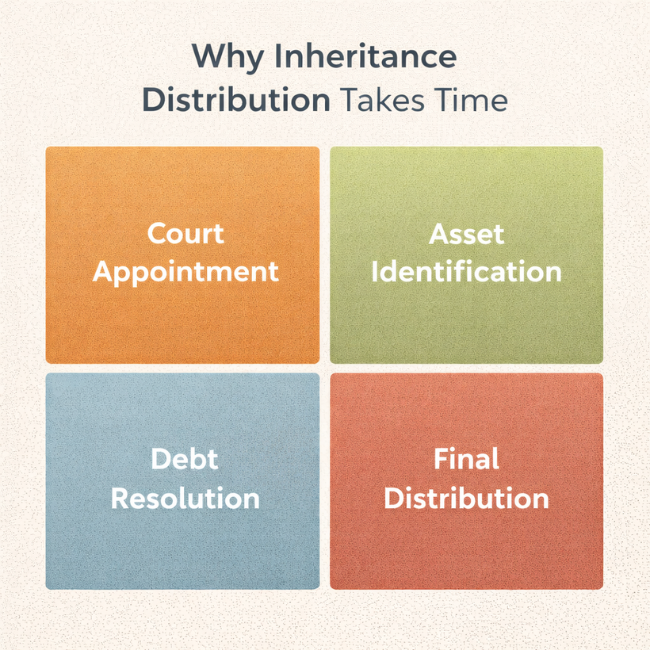
Several legal safeguards must occur first:
- court appointment of a personal representative
- identification and valuation of estate assets
- notification of creditors
- resolution of creditor claims
- payment of taxes and expenses
These steps ensure that assets are distributed according to legal requirements rather than prematurely released.
Typical Timeline for Receiving Inheritance
The answer to how long does it take to receive inheritance depends on the timeline of probate administration.
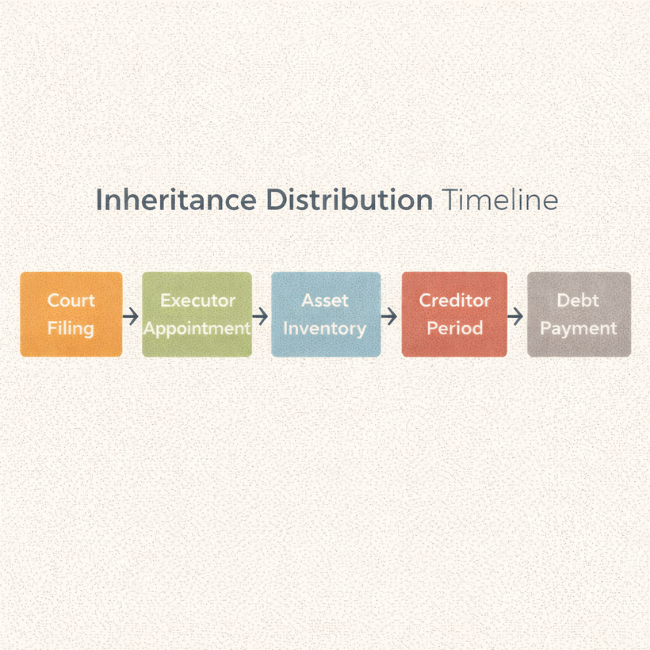
While each estate is different, many probate cases follow a similar sequence.
Filing the Probate Petition
Probate usually begins when a petition is filed with the court requesting appointment of the personal representative.
This filing typically occurs several weeks after death, once initial documents have been gathered.
Appointment of the Personal Representative
The court reviews the petition and appoints the executor or personal representative.
This appointment provides legal authority to act on behalf of the estate.
Depending on court schedules, this stage may take several weeks.
Identification and Inventory of Assets
After appointment, the personal representative must identify and document all estate assets.
This may include:
- real estate
- bank accounts
- investment accounts
- personal property
- business interests
Many states require an official asset inventory to be filed with the court.
Creditor Notification and Claim Period
Creditors must be given notice that probate has been opened.
Most states require a statutory period allowing creditors to submit claims against the estate.
This waiting period alone often lasts several months.
Payment of Debts and Taxes
Once claims are reviewed and validated, the estate must pay lawful obligations.
These may include:
- funeral expenses
- administration costs
- secured debts
- taxes
- medical bills
Only after these obligations are satisfied can the estate prepare for distribution.
Final Accounting and Court Approval
Before distributing assets, the personal representative typically prepares a final accounting.
This report documents:
- assets collected
- expenses paid
- debts satisfied
- remaining estate balance
Court approval may be required before final distribution occurs.
Factors That Affect the Inheritance Timeline
The timing of inheritance distribution varies depending on the circumstances of the estate.
Several factors commonly influence the timeline.
Estate Complexity
Larger estates with multiple assets require additional time for valuation, documentation, and review.
Real estate, business interests, and investment portfolios often require formal valuation.
Creditor Claims
If creditors submit claims, those claims must be reviewed and resolved before distributions occur.
Disputes regarding claims may require additional documentation or court review.
Court Processing Time
Probate courts operate on scheduled hearing calendars. Court workload may affect how quickly documents are reviewed and approved.
Real Estate Sales
If estate property must be sold to satisfy debts or distribute value among heirs, the sale process may extend the timeline.
Property listing, buyer negotiations, and closing procedures can add several months.
Common Misunderstandings About Inheritance Timing
Misunderstanding 1: Inheritance Is Distributed Immediately
Inheritance cannot be distributed immediately after death. Probate law requires debts and obligations to be resolved first.
Misunderstanding 2: Executors Control the Timeline Alone
The personal representative administers the estate, but the timeline is influenced by legal requirements, court procedures, and creditor deadlines.
Conclusion
Understanding how long does it take to receive inheritance requires recognizing the legal structure of probate administration. Courts require a careful sequence of steps designed to ensure debts are resolved, assets are properly accounted for, and distributions occur according to law.
While the process may take time, this structure protects both creditors and heirs while ensuring the estate is administered correctly.
This content is for general informational purposes only and does not constitute legal or financial advice.