





The Financial Responsibility of an Executor
Being named executor—or personal representative—means accepting a serious financial responsibility. After a death, legal authority shifts to the executor to manage estate assets, review obligations, and ensure that debts and distributions are handled according to probate rules.
Many executors begin this role without prior experience. The responsibilities can appear straightforward at first, yet small financial mistakes can create serious consequences. Improper payments, missing records, or mixing estate funds with personal funds can delay probate or expose the executor to personal liability.
Understanding the financial responsibilities of an executor helps prevent these problems. Probate follows a structured sequence, and careful financial management protects both the estate and the person responsible for administering it.
Separate Estate Funds Immediately
One of the most important financial steps an executor must take is keeping estate money completely separate from personal funds.
When a person dies, their financial assets—bank accounts, incoming payments, refunds, or property proceeds—become part of the estate. These funds must be handled through a dedicated estate account.
Using a personal account to deposit estate funds or pay estate bills may appear convenient, but it creates serious accounting problems. Once personal and estate funds are mixed together, it becomes difficult to determine which transactions belong to the estate.
For this reason, most probate professionals recommend opening an estate bank account as soon as the executor receives legal authority from the court.
A proper estate account allows the executor to:
- Deposit incoming estate funds
- Pay estate obligations
- Maintain clear financial records
- Produce accurate accounting if requested by the court or heirs
Maintaining separation between personal funds and estate funds is not simply good organization. It is a fundamental safeguard that protects the executor.
Understand the Order of Debt Payments
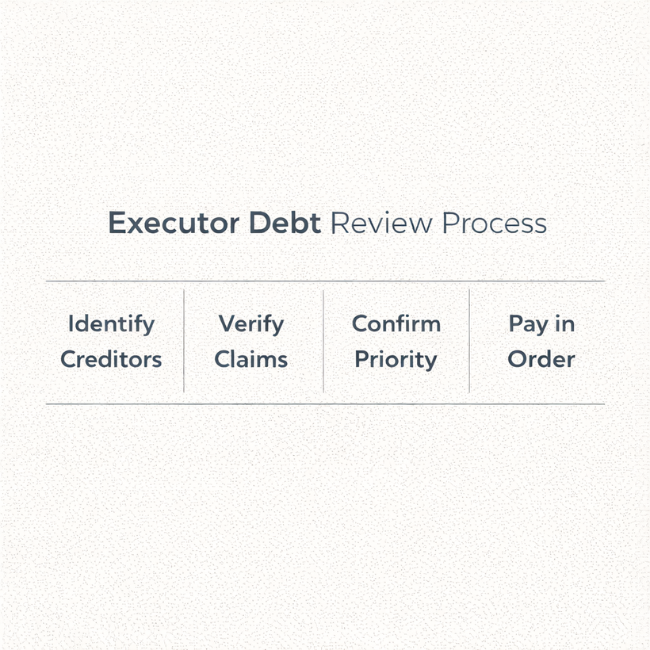
Another financial responsibility involves paying estate debts in the correct order.
Many executors assume that bills should be paid as they arrive. Probate law, however, requires debts to be reviewed and paid according to a statutory priority structure.
For a detailed breakdown of this required payment order, see Which Debts Get Paid First in Probate
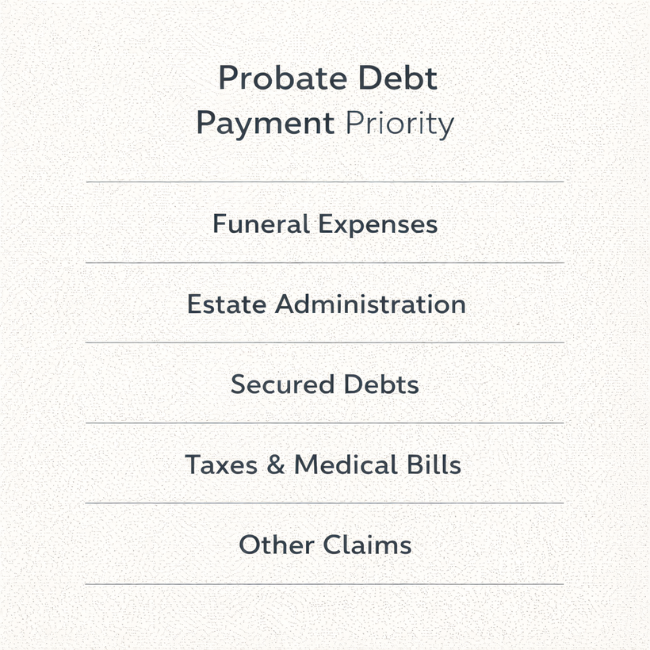
Although the exact order may vary slightly depending on jurisdiction, most probate systems follow a similar sequence:
- Funeral and burial expenses
- Estate administration expenses
- Secured debts (such as mortgages or vehicle loans)
- Taxes and certain medical expenses
- Other unsecured debts
This structure exists to ensure that essential obligations are satisfied before lower-priority claims.
If an executor pays debts out of order, estate funds may be depleted before higher-priority obligations are addressed. In some cases, the executor may even become responsible for correcting the mistake.
For this reason, executors should review creditor claims carefully before issuing payments.
Avoid Paying Estate Bills with Personal Money
Executors sometimes attempt to speed up the process by paying certain bills themselves, expecting reimbursement from the estate later.
This decision often creates more problems than it solves.
When an executor pays estate debts from personal funds, the transaction becomes difficult to document. Questions may arise later about the legitimacy of the expense, the timing of payment, or whether reimbursement is appropriate.
Even small payments can complicate accounting.
Instead of paying bills personally, the executor should wait until estate funds are available and use the estate account for all payments.
If immediate payment is required—for example, for funeral arrangements—the executor should consult with a probate attorney or financial professional before advancing funds.
Maintaining a clear financial boundary protects the executor and preserves transparency throughout the probate process.
Maintain Detailed Financial Records
Accurate record-keeping is one of the most important financial duties of an executor.
Every transaction connected to the estate should be documented. This includes money received, expenses paid, property sold, and distributions made.
Proper records typically include:
- Bank statements
- Copies of checks
- Receipts for payments
- Invoices and creditor claims
- Written transaction logs
These records serve several important purposes.
First, they allow the executor to track estate finances accurately. Probate often lasts months, and in some cases more than a year. Without organized documentation, financial details can quickly become difficult to reconstruct.
Second, detailed records protect the executor if questions arise from heirs or the court. Probate courts frequently require formal financial reports showing how estate funds were handled.
Clear documentation ensures the executor can demonstrate that funds were managed properly.
Do Not Rush Estate Distributions
One of the most common financial mistakes occurs when executors distribute money to heirs too early.
Heirs may request distributions soon after probate begins. While this request is understandable, premature distributions can create serious financial complications.
Before distributing estate assets, the executor must ensure that:
- All known debts have been reviewed
- Creditor claim periods have passed
- Taxes have been addressed
- Administration expenses have been paid
- Court approval requirements have been satisfied
If funds are distributed before these steps are complete, the estate may lack sufficient resources to pay remaining obligations.
Recovering distributed funds from heirs can be difficult or impossible. As a result, the executor may face pressure to resolve the shortfall personally.
Patience during probate protects both the estate and the executor.
Recognize When Professional Guidance Is Necessary
Executors are not expected to master probate law or estate accounting on their own. However, they are expected to act responsibly when financial decisions become complex.
Professional guidance may be helpful when:
- Estate debts appear unclear
- Property must be sold to pay obligations
- Taxes must be calculated or filed
- Creditor disputes arise
- Large or complicated estates are involved
Probate attorneys, accountants, and specialized probate services can assist with financial questions and procedural steps.
Seeking guidance early often prevents costly mistakes later.
Serving as an executor is both a practical and financial responsibility. Every action taken during probate affects the estate and the people who will eventually receive its assets.
Executors who follow a structured financial approach—separating funds, reviewing debts carefully, maintaining records, and delaying distributions until appropriate—greatly reduce the risk of errors.
Probate may involve legal procedures, but financial discipline is what ultimately protects the estate.
This article is provided for general informational purposes only and does not constitute legal or financial advice.