





Understanding the Responsibilities and Emotions That Shape Grief During Probate
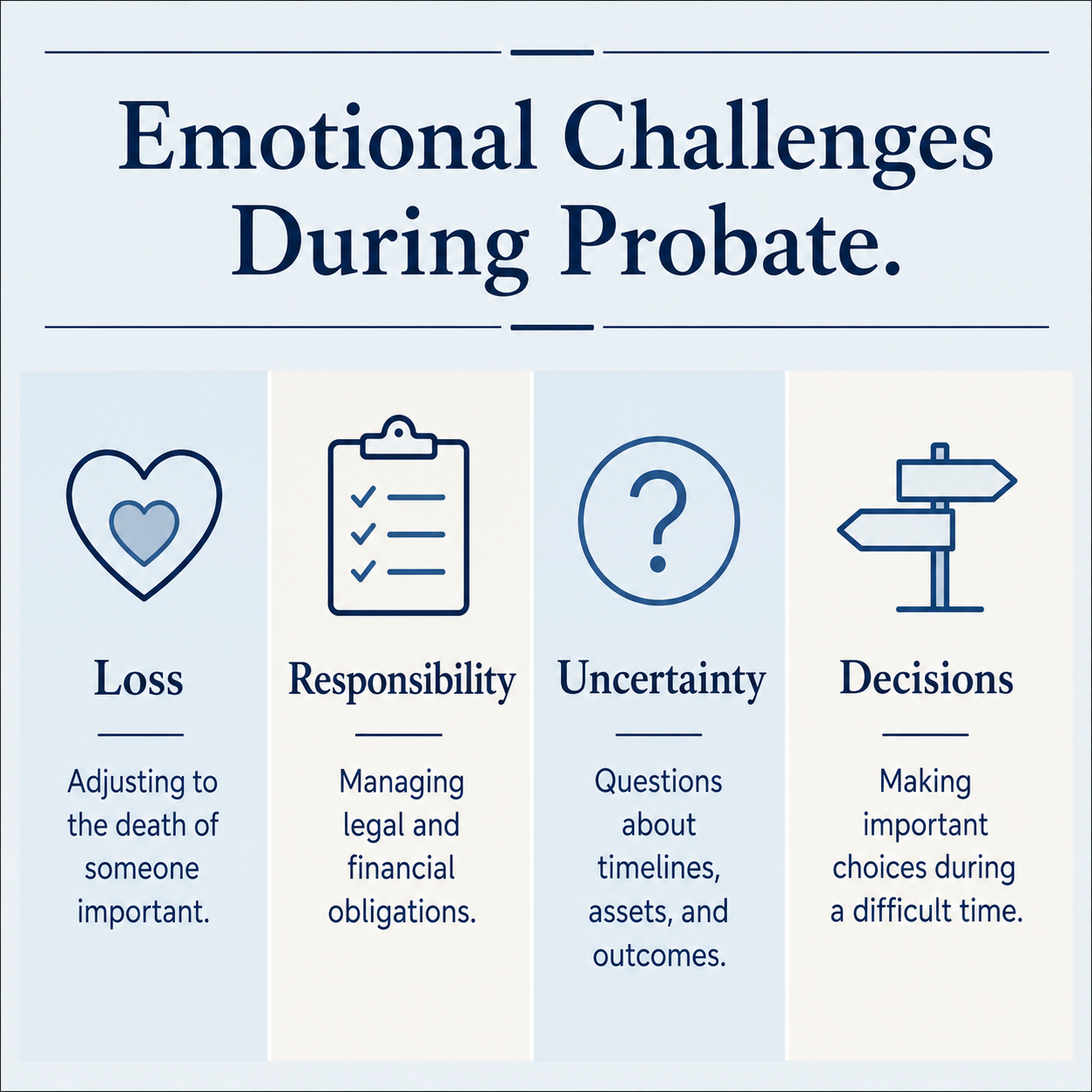
Grief during probate often feels different from grief experienced in other circumstances because it occurs alongside legal responsibilities, financial decisions, deadlines, and administrative obligations. While grief is a personal response to loss, probate introduces structured tasks that continue regardless of emotional readiness.
For many individuals, the experience involves balancing personal loss with responsibilities that require attention, organization, and decision-making. Understanding why grief during probate feels different begins with understanding how the probate process changes the demands placed on family members, executors, and beneficiaries.
What Is Grief During Probate?
Grief during probate refers to the emotional response that occurs while an estate is being administered after a person's death.
Unlike grief that unfolds without major administrative obligations, probate often requires immediate action. Documents must be gathered, assets must be identified, financial accounts must be reviewed, and legal requirements must be followed.
As a result, individuals may find themselves managing estate matters while also processing personal loss.
This combination of emotional response and legal responsibility creates circumstances that differ from many other grieving experiences.
Why Responsibilities Change the Experience of Grief
One reason grief during probate feels different is the immediate assumption of responsibility.
An executor or personal representative may suddenly become responsible for:
- Managing estate assets
- Gathering financial information
- Communicating with institutions
- Maintaining records
- Responding to legal requirements
These responsibilities often begin shortly after a death occurs.
The need to address practical matters can limit the time available for emotional processing. As a result, grief and responsibility frequently develop at the same time rather than separately.
For related guidance, see executor responsibilities after death
The Volume of Information Can Feel Overwhelming
Probate administration requires extensive information gathering.
Individuals may need to locate:
- Bank records
- Investment statements
- Insurance documents
- Property records
- Tax information
- Debt records
Many people are unfamiliar with the complete financial picture of the deceased person's affairs.
Locating, organizing, and reviewing this information requires concentration and sustained attention. When combined with grief, the volume of information can contribute to emotional strain.
This is one reason emotional stress during probate is frequently reported by executors and family members.
Probate Creates Ongoing Decisions
Grief often occurs during periods when important decisions must be made.
These decisions may involve:
- Property maintenance
- Real estate matters
- Asset valuation
- Creditor claims
- Professional services
- Financial distributions
Each decision may affect the administration of the estate.
Although many decisions are procedural, the cumulative effect of repeated decision-making can create mental fatigue. The need to make important choices while coping with loss is one of the factors that makes probate and grief closely connected.
Legal Deadlines Continue Regardless of Loss
Probate follows established legal procedures.
Depending on the jurisdiction, responsibilities may include:
- Court filings
- Creditor notifications
- Inventory submissions
- Tax filings
- Estate accountings
These obligations are often governed by specific deadlines.
Unlike personal grief, legal timelines continue according to statutory requirements. The presence of deadlines during a period of loss can increase pressure and contribute to emotional stress during probate.
For many individuals, the challenge is not the existence of the deadlines themselves but the need to manage them while adjusting to a significant life event.
Financial Uncertainty Can Increase Emotional Strain
During the early stages of probate, the financial condition of the estate may not be fully understood.
Questions often arise regarding:
- Asset values
- Outstanding debts
- Tax obligations
- Available liquidity
- Creditor claims
Until information is verified, uncertainty remains.
This uncertainty may affect both executors and beneficiaries. Individuals may not know how long administration will take, whether assets will need to be sold, or what obligations must be satisfied before distributions occur.
The combination of uncertainty and responsibility can make grief during probate more difficult to manage.
Family Communication Can Become More Complex
Probate often requires ongoing communication among family members, beneficiaries, and professionals.
Beneficiaries may request:
- Updates
- Explanations
- Timelines
- Documentation
Even when relationships are positive, discussions involving finances, property, and inheritance can create additional pressure.
The responsibility to communicate accurately and consistently may become another administrative task added to an already demanding situation.
As a result, family communication frequently becomes an important factor in probate and grief.
Why Many Executors Worry About Mistakes
Executors often express concern about making errors during administration.
Common concerns include:
- Missing deadlines
- Overlooking assets
- Paying debts incorrectly
- Distributing assets too early
- Misunderstanding procedural requirements
These concerns arise because executors have fiduciary responsibilities that require careful administration of estate matters.
The desire to perform the role correctly is understandable. However, the pressure associated with avoiding mistakes can increase emotional burden and contribute to ongoing stress.
For many individuals, coping with probate responsibilities includes learning new procedures while maintaining confidence in their decisions.
Common Misunderstandings About Grief During Probate
Grief and Probate Are Separate Experiences
Many people assume that grief and probate occur independently.
In reality, they often overlap. Administrative responsibilities and emotional responses frequently occur at the same time.
Feeling Overwhelmed Indicates Inability
Another common misunderstanding is that feeling overwhelmed reflects a lack of preparation or capability.
Probate combines legal obligations, financial management, communication responsibilities, and personal loss. The complexity of these combined demands affects many individuals regardless of prior experience.
Understanding Why Grief During Probate Feels Different
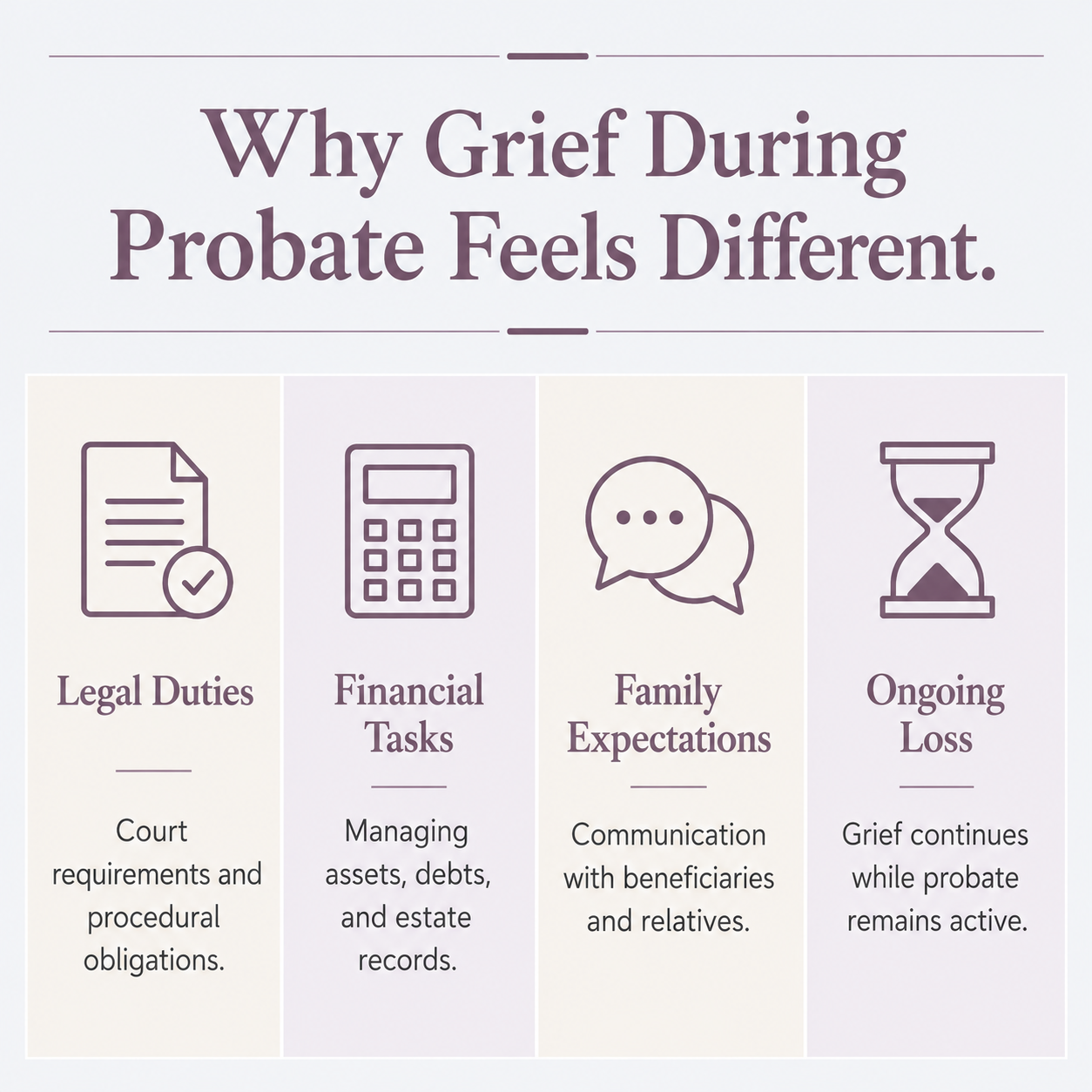
Grief during probate feels different because personal loss occurs alongside ongoing responsibilities.
The process may involve:
- Legal obligations
- Financial administration
- Document management
- Family communication
- Procedural deadlines
Each responsibility requires attention while emotional adjustment is still taking place.
Understanding this overlap helps explain why probate often feels more demanding than many people expect.
Key Point
Grief during probate differs from other grieving experiences because it combines personal loss with legal, financial, and administrative responsibilities. The need to manage documents, decisions, deadlines, and communication while processing a significant loss creates a unique set of demands.
Recognizing this structure helps explain why probate can feel emotionally complex and why many individuals experience both responsibility and grief at the same time.
This explanation is provided for general informational purposes only and does not constitute legal or financial advice.