





What should you look for in a probate real estate agent? The answer involves more than real estate experience alone. Probate property sales often involve authority requirements, valuation decisions, estate documentation, and coordination with legal professionals. Understanding which qualifications matter can help executors and personal representatives make a more informed decision when selecting an agent.
While many real estate agents are experienced in residential sales, probate transactions often involve additional responsibilities that are not present in a traditional home sale. Knowing what to evaluate before making a decision can help support a smoother transaction and reduce avoidable complications.
Why Probate Real Estate Is Different
Probate real estate differs from a traditional real estate transaction because the property is part of a deceased person's estate. Before certain actions can occur, the personal representative or executor must have the legal authority required under applicable probate procedures.
Depending on the circumstances, the sale may involve court requirements, estate documentation, beneficiary considerations, creditor claims, or other probate-related responsibilities. These factors can affect both the timing and administration of the transaction.
For readers who are new to the probate process, understanding What Is Probate and How Does It Work? can provide useful context before addressing real estate decisions.
Not every probate case follows the same path. Requirements vary by state, court procedures, and the complexity of the estate. However, what remains consistent is the need for careful documentation, clear communication, and adherence to established procedures.
Because of these differences, experience with probate real estate can be valuable. An agent who regularly handles probate property sales is often better prepared to recognize potential issues before they create delays.
Understanding Authority to Sell
One of the most common misunderstandings involves authority to sell estate property.
Many individuals assume that property can be listed immediately after a death occurs. In reality, the personal representative or executor may need to satisfy certain legal requirements before a sale can move forward.
The timing and authority to sell depend on the laws of the applicable jurisdiction and the circumstances of the estate. In some situations, additional approvals may be required before the transaction can proceed.
A probate real estate agent should understand the importance of confirming authority before listing a property. This helps prevent delays, contract complications, and misunderstandings during the sale process.
For additional information, see Can an Executor Sell a House That Is in Probate?
Key Qualifications to Look For
Not every real estate professional has experience working with probate property. When evaluating potential agents, several qualifications deserve particular attention.
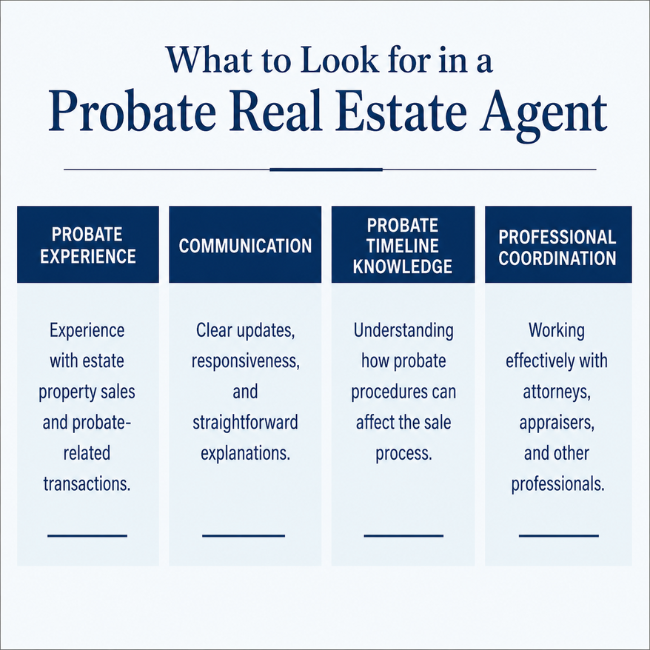
Probate Experience
One of the first questions to ask is how many probate property sales the agent has handled.
A probate real estate agent who regularly works with probate transactions is more likely to understand estate-related documentation, authority requirements, and the coordination often required between multiple parties.
Experience alone does not guarantee quality, but familiarity with probate-related transactions can help reduce confusion and improve efficiency throughout the process.
Communication
Clear communication is essential in any real estate transaction, but it becomes even more important when multiple parties are involved.
The agent should be able to explain the process clearly, provide regular updates, and communicate expectations in a straightforward manner. Questions should be answered directly and important developments should be communicated promptly.
The initial conversation often provides useful insight into how communication will be handled throughout the transaction.
Knowledge of Probate Timelines
Probate cases often follow timelines that differ from traditional real estate transactions.
A qualified probate real estate agent should understand how probate requirements can affect listing dates, offer acceptance, closing schedules, and other transaction milestones.
While agents do not provide legal advice, they should understand how probate procedures may influence the timing of a property sale and coordinate appropriately with legal professionals when necessary.
Professional Coordination
Probate transactions frequently involve attorneys, financial professionals, appraisers, contractors, cleanout companies, and other service providers.
An experienced probate real estate agent should be comfortable working as part of a broader professional team. Effective coordination helps ensure that responsibilities remain clear and that information is communicated appropriately among the parties involved.
The ability to work effectively with other professionals is often just as important as real estate knowledge.
Marketing Strategy
The agent should also be able to explain how the property will be marketed, how showings will be managed, and how buyer interest will be evaluated.
A clear marketing strategy helps establish expectations and provides transparency throughout the sale process. Understanding how the property will be presented to potential buyers is an important part of evaluating any real estate professional.
Understanding Property Value Before Listing
Before listing estate property for sale, it is important to understand its value.
Many families assume that determining value is simply a matter of reviewing online estimates or comparing nearby homes. However, probate property often presents circumstances that require a more detailed analysis.
Property condition, deferred maintenance, local market conditions, required repairs, and comparable sales can all influence value. An experienced probate real estate agent should be able to explain how a recommended listing price was determined and provide supporting market data.
A property that is listed too low may reduce the value ultimately received by the estate. A property that is priced unrealistically high may remain on the market longer than expected. Accurate valuation helps establish reasonable expectations and supports informed decision-making before the property is listed.
When discussing pricing, ask the agent how the valuation was developed, what comparable properties were reviewed, and what factors influenced the final recommendation.
Clear explanations are generally more useful than simple estimates.
For additional information, see Probate Property Valuation Before Selling
Questions to Ask Before Choosing an Agent
Speaking with more than one probate real estate agent can provide useful perspective and allow for a comparison of qualifications, experience, and communication style.
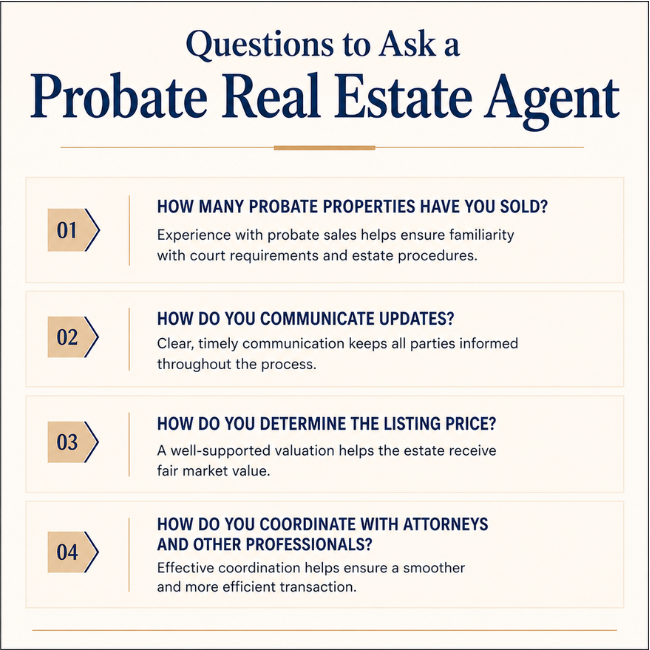
Consider asking the following questions:
- How many probate properties have you sold?
- How familiar are you with probate-related real estate transactions?
- What challenges commonly arise during probate property sales?
- How do you communicate updates throughout the transaction?
- How do you coordinate with attorneys and other professionals involved in the estate?
- How do you determine an appropriate listing price?
- What marketing strategy would you recommend for this property?
- What factors could affect the timeline for selling the property?
- How are offers evaluated and presented?
- What documentation is typically required before listing?
The purpose of these questions is not simply to gather information. They also provide an opportunity to evaluate how clearly and confidently the agent communicates.
An experienced professional should be able to discuss these topics without relying on vague or overly general explanations.
Referrals Can Be Helpful
Attorneys, financial professionals, and other trusted advisors often recommend real estate agents who have experience working with probate properties.
These referrals can be useful starting points, particularly when the referring professional has firsthand knowledge of the agent's work.
However, a referral should not automatically determine the final decision.
It is reasonable to speak with multiple agents, compare qualifications, and select the individual who appears best suited to the circumstances of the estate.
The final choice should be based on experience, communication, professionalism, and confidence in the agent's ability to manage the transaction appropriately.
Understanding Commissions and Sale Proceeds
Real estate commissions in probate transactions are generally structured similarly to commissions in traditional property sales, although specific arrangements may vary.
Before signing a listing agreement, review the commission structure carefully and ensure that all terms are clearly explained.
It is also important to understand how proceeds from the sale are handled.
Many people mistakenly assume that sale proceeds are distributed immediately after closing. In reality, proceeds are often placed into the estate account and remain subject to the probate administration process.
The timing of distributions depends on the circumstances of the estate, including debts, expenses, court requirements, and other obligations that may need to be addressed before distributions occur.
A probate property sale is only one part of the broader estate administration process. For a more detailed explanation, see How to Sell Probate Property: Legal Steps, Authority, and What to Expect
A probate real estate agent should be able to explain the real estate aspects of the transaction while recognizing that legal questions should be directed to the estate's attorney.
Key Point
When evaluating a probate real estate agent, focus on the factors that directly affect the transaction: probate experience, communication, authority requirements, valuation knowledge, understanding of probate timelines, and professional coordination.
These qualifications often play a significant role in how efficiently a probate property sale moves forward. Taking the time to evaluate these factors can support a more informed decision when estate property must be sold.
This article is provided for informational and educational purposes only and should not be considered legal, financial, tax, or real estate advice. Probate procedures vary by jurisdiction. Individuals involved in probate matters should consult appropriate qualified professionals regarding their specific circumstances.