





How Estate Debts Are Reviewed, Prioritized, and Paid Before Inheritance Is Distributed
Who pays debts during probate is a common question after a person passes away. When probate begins, the estate—not the heirs—usually becomes responsible for paying valid debts. Understanding who pays debts during probate requires knowing how estate assets are identified, how creditor claims are reviewed, and how payment priority is determined under probate law.
Probate is the legal process that confirms authority to manage a deceased person’s assets. Once a personal representative or executor is appointed, that individual becomes responsible for administering the estate according to court procedures.
Who Pays Debts During Probate?
In most situations, debts are paid from the estate before any inheritance is distributed. The estate includes assets that were owned solely by the deceased person and that must pass through probate.
The executor or personal representative does not personally pay estate debts from their own funds. Instead, the executor manages estate assets and ensures that valid creditor claims are addressed using estate funds.
Estate debts during probate may include:
- Credit card balances
- Medical bills
- Personal loans
- Mortgage obligations
- Utility bills
- Tax liabilities
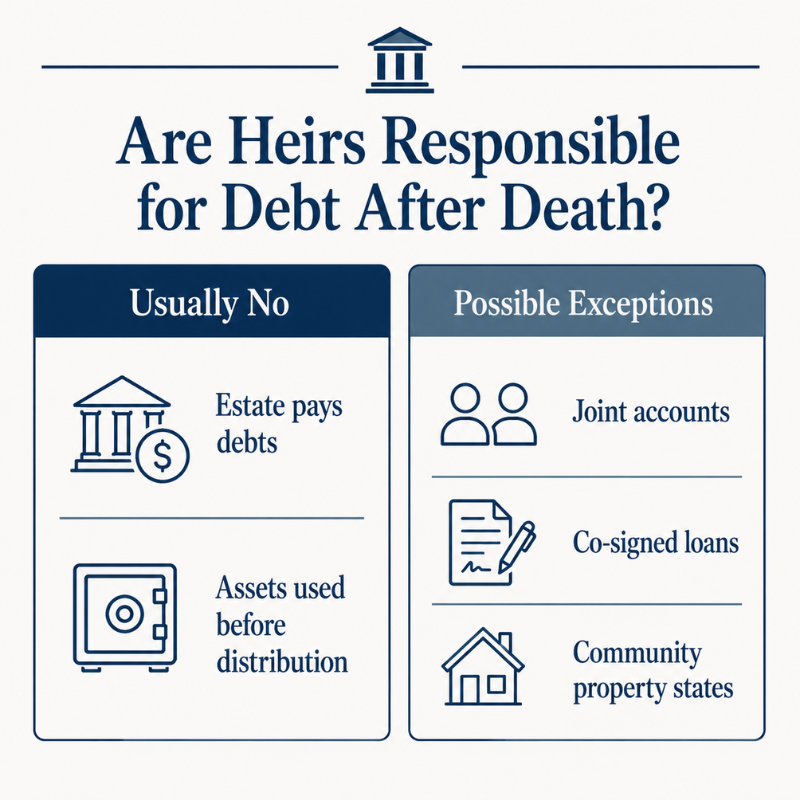
The key principle is this: the estate pays debts during probate, not individual heirs, unless special circumstances apply.
For additional background, see What Is Probate and How Does It Work?
Are Heirs Responsible for Debt After Death?
A frequent concern is whether heirs must use their own money to pay a deceased person’s debts.
In general, heirs are not personally responsible for debt after death. However, there are exceptions. Personal responsibility may apply if:
- The heir was a joint account holder
- The heir co-signed a loan
- The heir is a surviving spouse in certain states
- The heir received assets improperly before debts were settled
Outside of these circumstances, beneficiaries do not inherit debt. They inherit what remains after debts and expenses are resolved.
Understanding who pays debts during probate helps clarify that inheritance is distributed only after obligations are satisfied.
For related guidance, see Do You Inherit Debt During Probate?
How Are Debts Paid During Probate?
The process follows a structured order. Once probate opens, creditors are typically notified. They may file formal claims against the estate.
The executor reviews each claim. Not all claims are valid. Some may be disputed or rejected.
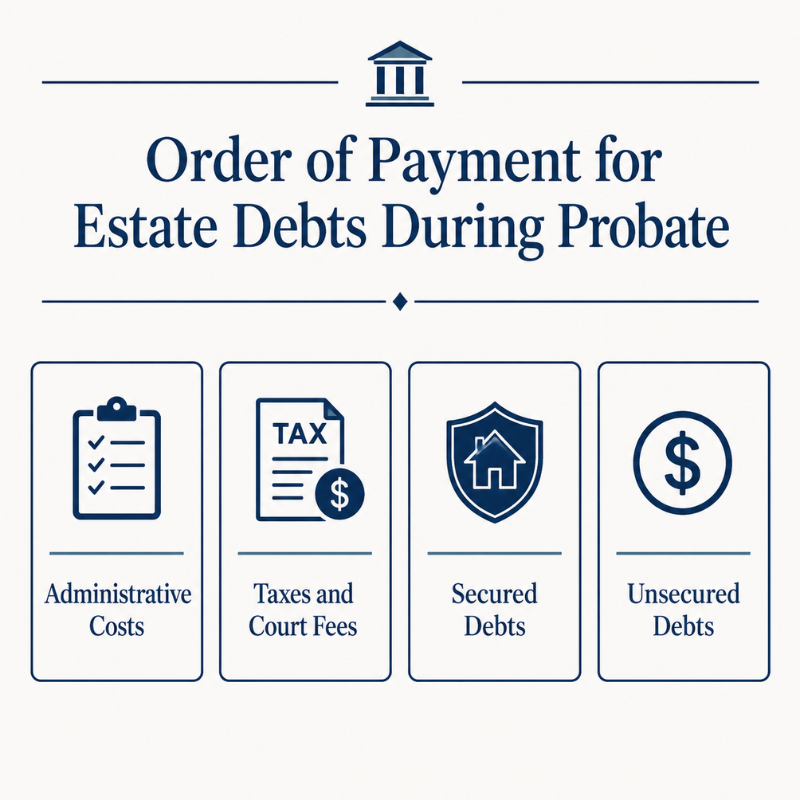
If the estate has sufficient assets, debts are paid according to statutory priority. The order of payment is not random. Probate law defines which expenses are paid first.
Common payment order may include:
- Administrative costs of probate
- Court fees and legal expenses
- Funeral expenses
- Taxes
- Secured debts
- Unsecured debts
Only after these categories are satisfied can remaining assets be distributed to beneficiaries.
This structure explains who pays debts during probate and how payment decisions are made.
For additional information, see Which Debts Get Paid First in Probate?
What Happens If the Estate Cannot Pay All Debts?
Sometimes estate debts during probate exceed available assets. When this happens, the estate is considered insolvent.
In an insolvent estate:
- Debts are paid according to legal priority
- Lower-priority creditors may receive partial payment
- Some debts may go unpaid
Heirs are generally not required to cover unpaid balances unless they are legally obligated through joint liability.
If the estate lacks sufficient funds, beneficiaries may receive reduced distributions or no distribution at all.
Understanding insolvency is important when asking who pays debts during probate. The estate pays to the extent assets exist. If assets are insufficient, creditors bear the loss according to priority rules.
What Role Does the Executor Have?
The executor’s responsibility is administrative, not personal. The executor must:
- Identify estate assets
- Notify creditors
- Review claims
- Maintain accurate records
- Pay valid debts in proper order
The executor must not distribute assets before debts are resolved. Doing so may create legal complications.
Executor responsibility for estate debts does not mean personal liability in normal circumstances. It means managing the process carefully and in compliance with probate requirements.
Do All Debts Go Through Probate?
Not all debts are handled the same way.
Some assets pass outside probate. For example:
- Joint accounts with rights of survivorship
- Payable-on-death accounts
- Assets held in trust
If a debt is secured by a specific asset, such as a mortgage tied to a home, the obligation may follow the property.
Understanding asset ownership structure helps clarify who pays debts during probate and which assets are used to satisfy obligations.
Why This Question Matters
Questions about debt often create confusion. Many families worry that they will inherit financial liability. In most probate cases, that is not how the law operates.
The estate pays debts during probate using estate assets. Heirs receive what remains after legally required payments are completed.
Clear understanding reduces misunderstanding about responsibility, payment order, and inheritance timing.
Key Point
Who pays debts during probate depends on estate assets, creditor claims, and statutory payment priority. In most cases, the estate pays valid debts before inheritance is distributed. Heirs are not personally responsible unless they have independent legal liability.
This explanation is provided for general informational purposes only and does not constitute legal or financial advice.