





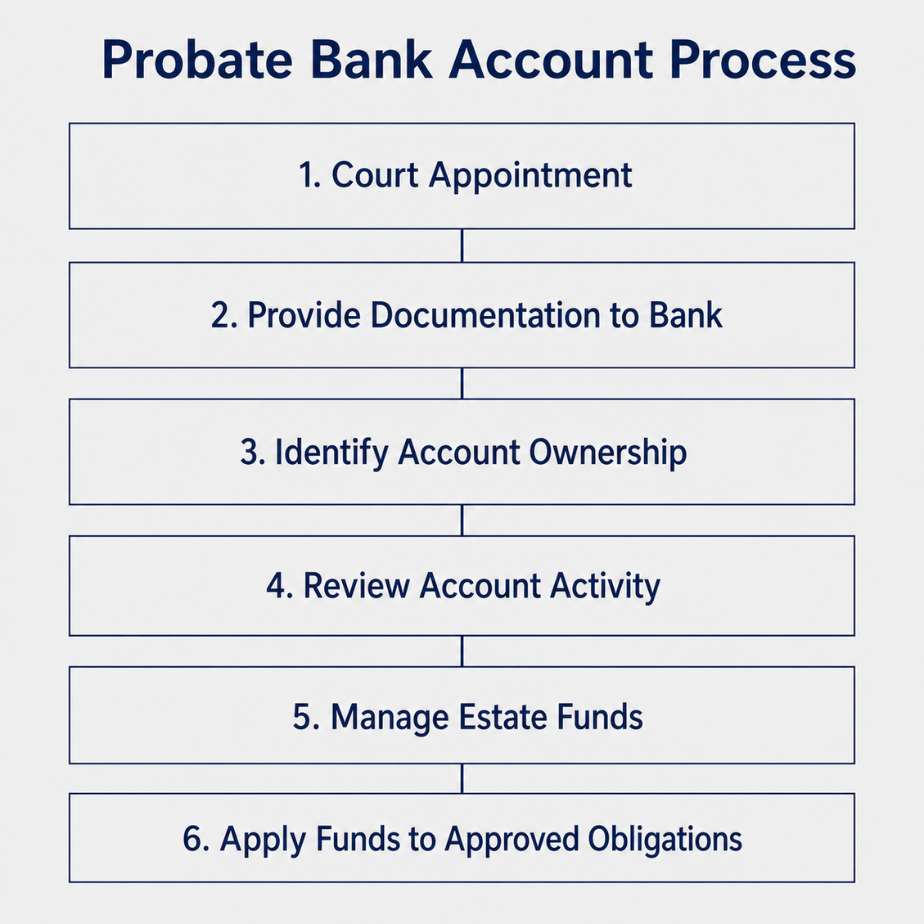
The probate bank account process refers to how bank accounts are identified, reviewed, accessed, and managed after a person passes away when those accounts are part of the estate. The probate bank account process begins only after court authority is established and required documentation is provided to financial institutions. For a broader explanation of how probate works, see What Is Probate and How Does It Work?
Banks do not release access to accounts solely because a death has occurred. Documentation and court appointment are required before the probate bank account process can move forward.
When the Probate Bank Account Process Begins
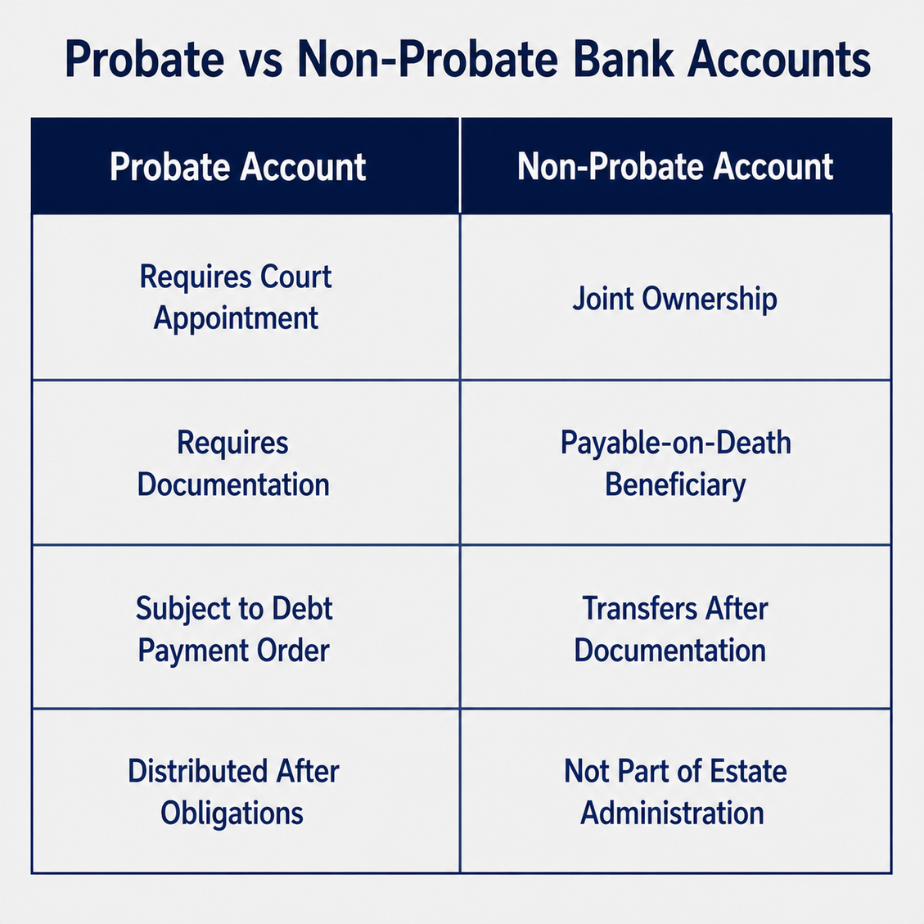
The probate bank account process typically begins once a personal representative, often called an executor, is appointed by the probate court. Financial institutions require documentation before allowing any action on accounts owned solely by the deceased.
- A certified death certificate
- Government-issued identification
- Court-issued letters of authority
- Estate identification information
Once authority is confirmed, the probate bank account process progresses to account identification and review.
Identifying Estate Bank Accounts
Accounts owned solely by the deceased are typically subject to probate. Joint accounts may transfer automatically depending on the agreement. Accounts with payable-on-death beneficiaries may transfer outside of probate once documentation is submitted.
Managing Funds During Probate
For accounts that are part of probate, the executor must protect estate funds, keep them separate from personal funds, and use them only for approved estate purposes. Estate funds may ultimately be applied to creditor claims as explained in Who Is Responsible for Debts After Death?
Paying Expenses and Debts
Estate funds are used to pay approved administrative expenses, court fees, creditor claims, and taxes according to statutory order before distribution occurs. The required payment structure is outlined in Which Debts Get Paid First in Probate?
Reviewing Account Activity
The executor should examine deposits, withdrawals, automatic payments, and recurring obligations.
This content is provided for general informational purposes only and does not constitute legal or financial advice. Laws vary by state.