





What happens to debt after death and when responsibility may apply
When someone dies, questions about debt often arise. One of the most common concerns is whether debt is passed to heirs. Understanding how debt in probate is handled helps prevent incorrect assumptions.
In most cases, debt in probate is paid from the estate, not by heirs. However, certain situations may create responsibility depending on how accounts were structured.
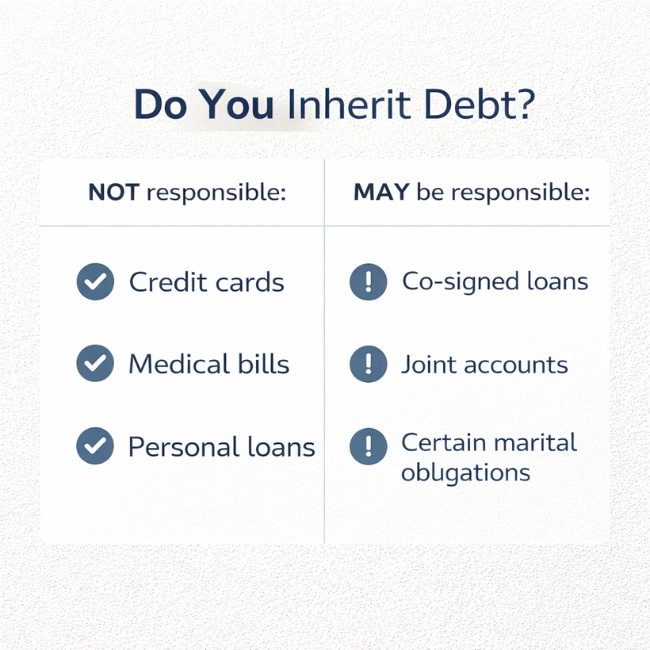
Are Debts Inherited?
In the United States, debts are generally not inherited.
Outstanding balances are paid from the estate. The estate includes property, accounts, and financial assets left behind.
Heirs are not personally responsible for credit cards, medical bills, or loans unless their name is legally connected to the obligation.
How Debt in Probate Is Handled
Debt in probate follows a structured process.
First, the executor or personal representative identifies all assets and liabilities. Then, creditors are notified according to legal requirements.
After that, debts are paid in a specific order. This order matters.
For a detailed breakdown, see Which Debts Get Paid First in Probate
- Secured debts, such as mortgages, are addressed first
- Estate administration costs follow
- Taxes and required obligations are paid
- Unsecured debts, such as credit cards, are reviewed after
If the estate does not contain enough value, some debts may remain unpaid.
Heirs are not required to cover those amounts.
When Someone May Be Responsible
There are situations where responsibility may apply.
A person may be responsible if:
- They co-signed a loan
- They are a joint account holder
- State law assigns responsibility in certain marital property situations
Details vary by state. Therefore, understanding how the account was structured is essential.
The Executor’s Responsibility
The executor or personal representative is responsible for managing debt in probate.
This includes identifying creditors, reviewing claims, and ensuring debts are handled before any distribution.
In addition, assets should not be distributed before obligations are addressed. Doing so can create legal risk.
The sequence must be followed carefully.
Debt in probate follows the estate, not the heirs. Understanding this distinction prevents errors and helps ensure that responsibilities are handled correctly.
This content is for general informational purposes only and does not constitute legal or financial advice. Probate laws vary by state. Consult a licensed probate attorney in your jurisdiction before taking action.