





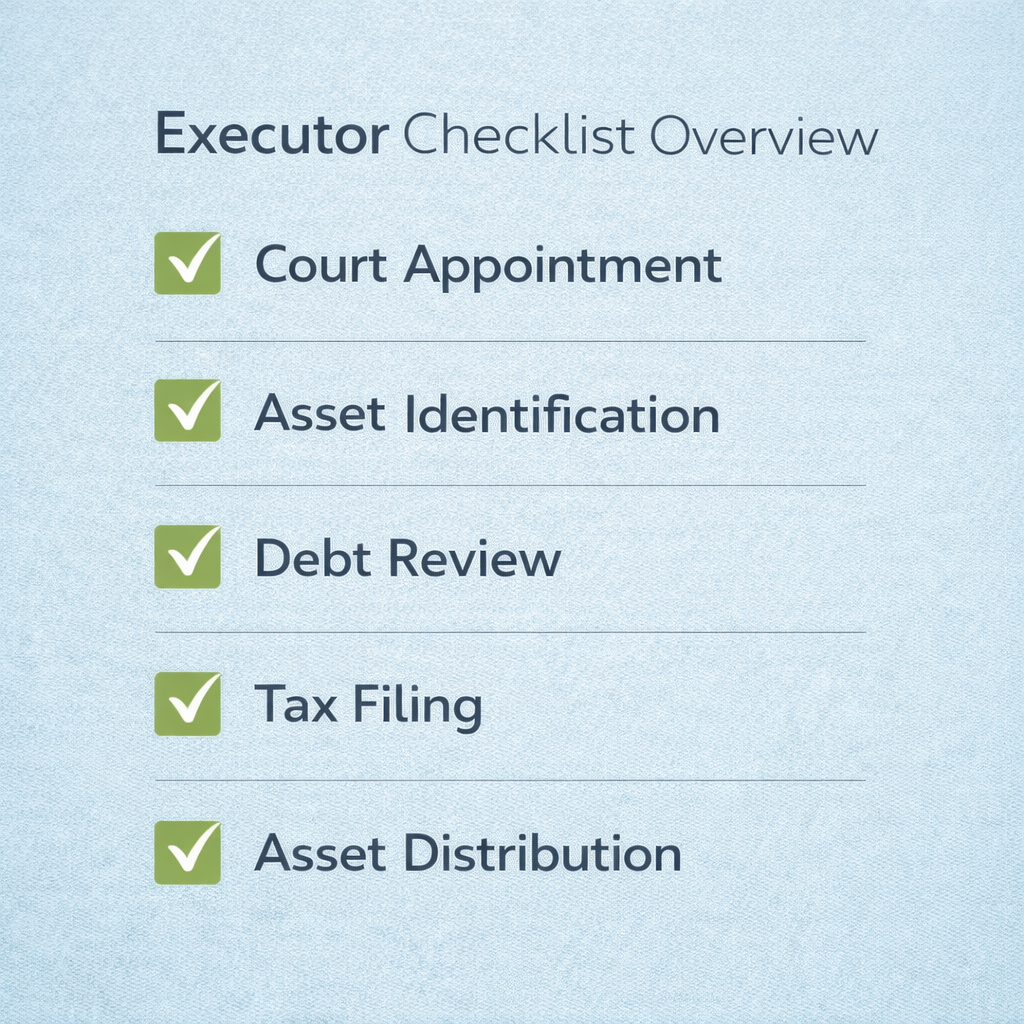
An executor checklist provides structure at the beginning of probate. This executor checklist outlines the steps required to manage estate responsibilities properly and avoid errors that can delay administration.
What an Executor Is Responsible For
The executor checklist begins after court appointment. An executor—or personal representative—must manage estate assets, review obligations, and complete each step in the correct order.
Responsibilities include:
- Protecting estate assets
- Identifying financial obligations
- Maintaining accurate records
- Completing required filings
- Distributing assets only when permitted
Each step in the executor checklist must be completed with accuracy and documentation.
The Complete Executor Checklist
A structured executor checklist follows a defined legal sequence.
- File the Will with the Probate Court
Submit the will to formally begin probate. - Obtain Court Appointment
Authority begins only after appointment. No action should be taken before this step. - Notify Heirs, Beneficiaries, and Creditors
Legal notice must be provided within required timelines. - Identify and Secure Assets
Locate and protect all estate property. - Prepare an Inventory of the Estate
Document and value all assets. - Review Debts and Financial Obligations
All liabilities must be identified before payment. -
Pay Debts in Legal Order
Debts must be paid in priority order.
Which Debts Get Paid First in Probate - Complete Required Tax Filings
File all necessary tax documents. -
Distribute Assets According to the Will
Distribution occurs only after completing prior steps.
How Long Does It Take to Receive Inheritance? - Close the Estate
Submit final documents to complete probate.
Executor Checklist Timeline
The executor checklist unfolds in stages.
Early Stage (1–3 Months)
- Court appointment
- Notifications
- Initial asset review
Middle Stage (3–9 Months)
- Inventory preparation
- Debt review
- Ongoing documentation
Final Stage (9–12 Months or More)
- Tax filings
- Asset distribution
- Estate closure
Following the executor checklist in order reduces delays.
Common Errors in an Executor Checklist
Errors often occur when the executor checklist is not followed carefully.
Acting Without Authority
Actions taken before appointment can create legal issues.
Mixing Funds
Estate and personal funds must remain separate.
Incorrect Debt Payment
Debts must be paid in the correct order.
Early Distribution
Assets must not be distributed before obligations are resolved.
Incomplete Records
Every step must be documented.
Why the Executor Checklist Matters
The executor checklist reflects the structure of probate. Each step must be completed in sequence to ensure proper administration.
Using an executor checklist helps:
- Maintain order
- Reduce delays
- Support accurate financial handling
- Ensure compliance with probate requirements
Serving as executor requires consistency and attention to detail. The executor checklist provides the structure needed to complete each step properly and bring the estate to closure.
This content is for general informational purposes only and does not constitute legal or financial advice. Probate laws vary by state. Consult a licensed probate attorney in your jurisdiction before taking action.