
When is probate required depends on how assets were titled at death and whether those assets transfer automatically. Probate is required when a deceased person owned assets in their sole name that do not pass by beneficiary designation, joint ownership, or trust structure.
This article explains when probate is required, when it is not, and the structural conditions that determine the difference.
Definition: What Probate Does
Probate is the court-supervised legal process used to:
- Validate a will (if one exists)
- Appoint a personal representative (executor)
- Identify and inventory estate assets
- Pay lawful debts and taxes
- Distribute remaining assets
Probate does not create ownership. It transfers ownership through legal authority.
When Is Probate Required?
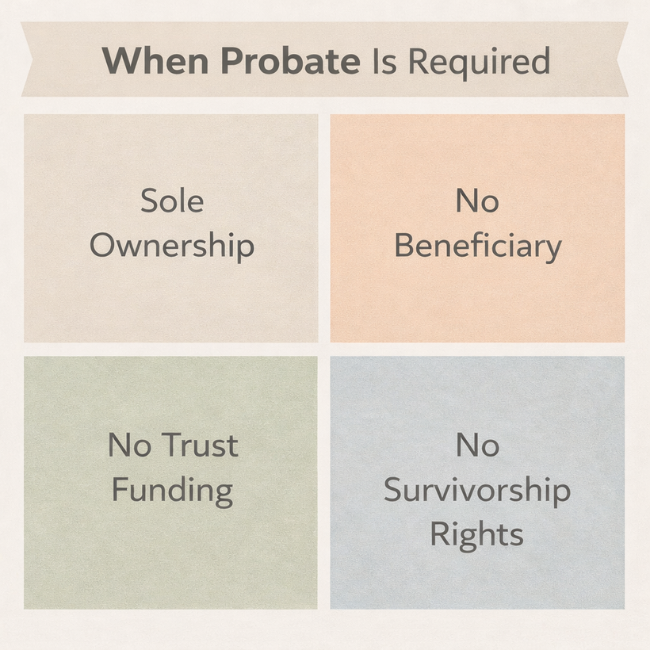
Probate is typically required when at least one of the following conditions exists:
1. Sole Ownership of Property
If a person owned real estate, bank accounts, or investments solely in their name without a designated beneficiary, probate is generally required to transfer title.
Example situations include:
- A house titled only in the deceased person’s name
- A bank account without a payable-on-death designation
- Investment accounts without transfer-on-death instructions
Without probate authority, those assets cannot legally transfer.
2. No Valid Beneficiary Designations
Certain assets bypass probate automatically when beneficiaries are named, including:
- Life insurance policies
- Retirement accounts
- Payable-on-death accounts
If no beneficiary is named, or the named beneficiary is deceased and no alternate exists, probate may be required.
3. No Living Trust in Place
Assets properly funded into a revocable living trust generally avoid probate.
However, probate becomes required if:
- The trust was never funded
- Property remained outside the trust
- Title was not properly transferred
Probate authority is then needed for those remaining assets.
4. Real Estate Without Survivorship Rights
Joint ownership can avoid probate if structured with rights of survivorship.
If property was owned:
- As tenants in common
- Or solely by the deceased
Probate is required to transfer ownership.
For real estate administration context, see: How to Sell Probate Property: Legal Steps, Authority, and What to Expect
When Probate Is Not Required
Probate is often not required when:
- All assets are jointly owned with survivorship
- All accounts have valid beneficiary designations
- All property is properly funded into a trust
- The estate qualifies under small-estate procedures (state specific)
Each state sets its own financial threshold for simplified administration.
State Law Variations
The answer to when is probate required is influenced by state statutes.
States differ in:
- Small estate thresholds
- Affidavit procedures
- Court supervision levels
- Filing timelines
Probate may be required in one state but avoided in another under similar circumstances.
For a broader overview of probate structure, see: What Is Probate and How Does It Work?
Structured Determination Process
To determine whether probate is required, follow this structured review:
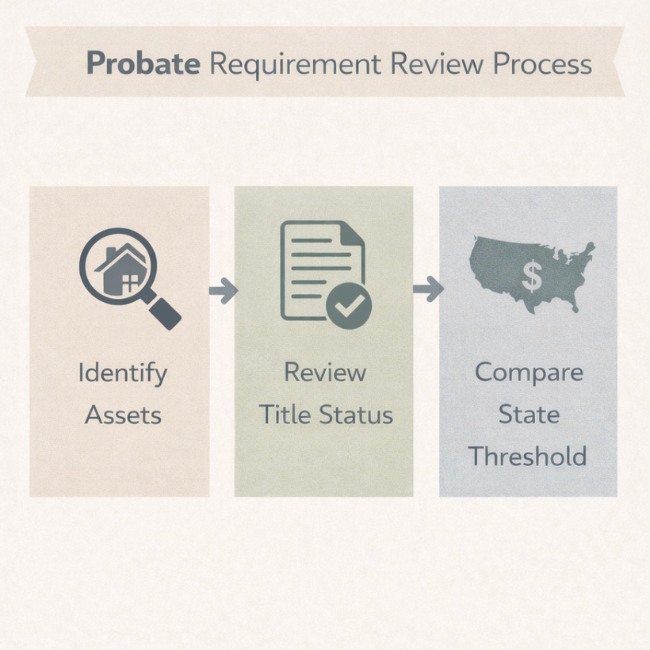
Step 1: Identify All Assets
List:
- Real estate
- Bank accounts
- Investment accounts
- Business interests
- Personal property
Step 2: Review Title and Beneficiary Status
Confirm for each asset:
- Is it solely owned?
- Is there a surviving joint owner?
- Is there a named beneficiary?
- Is it held in a trust?
Step 3: Compare With State Probate Threshold
Review:
- Small estate affidavit limits
- Real estate transfer rules
- Court filing requirements
If sole ownership assets exceed the threshold, probate is generally required.
Common Misunderstandings
Misunderstanding 1: A Will Avoids Probate
A will does not avoid probate. A will directs the court how to distribute assets during probate.
Without probate, the will has no legal transfer mechanism.
Misunderstanding 2: Probate Is Always Required
Not all estates require probate. Transfer structure determines necessity.
The existence of a will alone does not trigger probate. Asset ownership does.
Special Considerations
Out-of-State Property
If the deceased owned property in more than one state, ancillary probate may be required in each jurisdiction.
Missing Documentation
Unclear title or incomplete beneficiary designations may create a probate requirement even when avoidance was intended.
Disputes
Contested wills or disputes among heirs may require formal probate even if simplified options exist.
Audio Briefing
Conclusion
The question when is probate required is answered by examining ownership structure, beneficiary designations, trust funding, and state law thresholds. Probate becomes necessary when assets cannot transfer automatically through legally recognized mechanisms.
This content is for general informational purposes only and does not constitute legal or financial advice. Probate laws vary by state. Consult a licensed probate attorney in your jurisdiction before taking action.