
How to prepare for probate begins with understanding what the court requires before authority is granted. Many people ask how to prepare for probate when documents must be located and assets identified. Knowing how to prepare for probate helps ensure records are organized before the probate process moves forward.
Probate follows statutory order. Preparation supports that order by ensuring information is accessible when needed.
Section 1 — Explanation: What Probate Preparation Involves
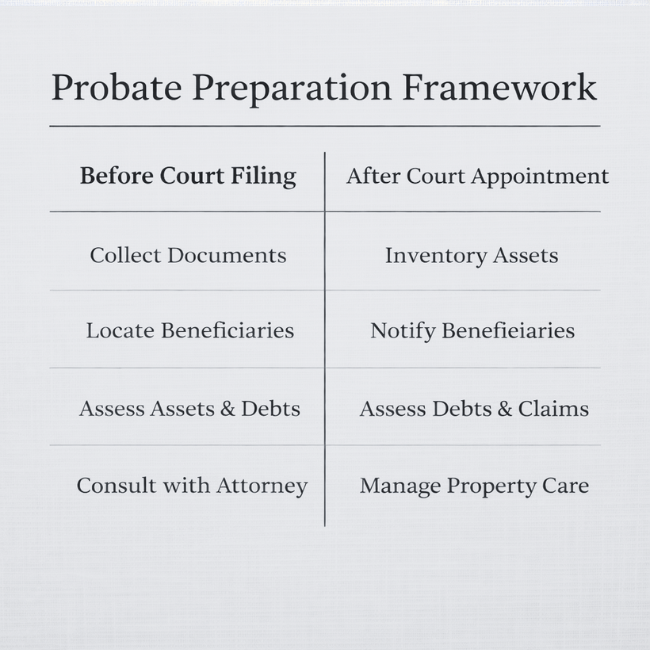
Understanding how to prepare for probate requires clarity about the sequence that follows death. Probate generally includes:
- Court appointment of a personal representative
- Identification of assets
- Notification of creditors
- Payment of valid claims
- Distribution of remaining property
Preparation does not replace probate. It supports the administrative steps that occur after court appointment.
Common preparation elements include:
- Locating the original will
- Identifying financial accounts
- Listing real property
- Gathering insurance policies
- Compiling outstanding debts
When considering how to prepare for probate, the focus remains on documentation and organization. Having these materials available reduces delays once the court grants authority.
Section 2 — How to Prepare for Probate Before Court Filing
When asking how to prepare for probate before filing, attention should remain on documentation rather than decision-making authority. No legal authority exists until the court appoints a personal representative.
- Confirming asset ownership
- Identifying account institutions
- Locating beneficiary designations
- Verifying property titles
These steps do not initiate probate. They clarify what the court-supervised process will later address.
Section 3 — What People Often Misunderstand
Several misunderstandings arise when discussing how to prepare for probate.
Preparation prevents probate
Even with organized documents, estates typically require court supervision.
Probate begins automatically
A formal petition must be filed before authority exists.
Preparation determines inheritance
Distribution follows the will or state intestacy statutes.
Understanding how to prepare for probate involves recognizing that preparation supports process efficiency but does not change statutory structure.
Section 4 — When Preparation Makes a Greater Difference
Larger Estates
Estates with multiple accounts or properties require more documentation. Organized records reduce administrative delay.
Real Estate Holdings
Property deeds, mortgage statements, and tax records are often requested early in probate administration.
No Will
If no will exists, identifying assets and potential heirs may require additional documentation.
Multi-State Assets
Assets located in more than one state may require additional proceedings. Clear records help identify jurisdictional requirements.
In each case, preparation affects efficiency, not legal authority.
Section 5 — Key Point
How to prepare for probate centers on documentation and organization before or during court filing. The probate process establishes authority first, then administers assets and debts according to statute.
Understanding how to prepare for probate supports administrative clarity but does not replace formal court procedure.
Need further clarification about this probate topic?
Explore our structured probate resources for a deeper understanding of how legal authority, financial responsibility, and property decisions are addressed within the probate process.
This article is provided for general informational purposes only and does not constitute legal or financial advice.