
Delayed Emotional Processin
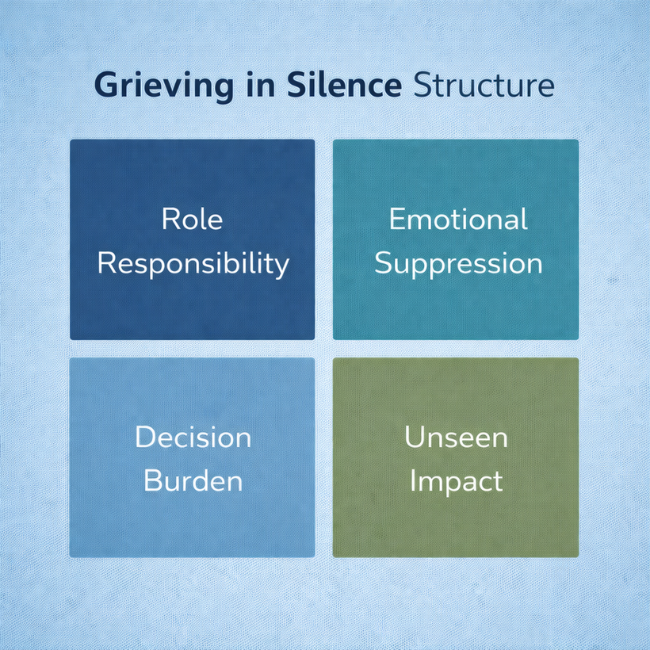
Grieving in silence occurs when responsibilities continue while emotional response remains unexpressed. This often happens during probate, where structured duties move forward regardless of personal loss.
In addition, the person handling these responsibilities is often expected to remain consistent, organized, and available. As a result, emotional expression may be delayed or set aside.
Definition: What Grieving in Silence Means
Grieving in silence refers to a condition where emotional response exists but is not outwardly expressed due to ongoing responsibilities.
This may include:
- continued decision-making
- limited time for reflection
- focus on structured tasks
- reduced external acknowledgment
Therefore, the experience becomes divided between external performance and internal response.
The Role That Leads to Grieving in Silence
After a death, one person often assumes responsibility for essential tasks. This may occur through formal appointment or expectation.
These responsibilities may include:
- organizing records
- coordinating communication
- managing estate-related decisions
- handling timelines and obligations
In addition, this role creates stability for others. However, it can also limit space for emotional expression.
Responsibilities Stress During Probate
Handling estate matters can create responsibilities stress when multiple obligations require attention at the same time.
This level of responsibility can create what many describe as responsibilities stress during probate.
For example, decisions must be made while information is still being gathered. Deadlines must be met while emotional capacity may be reduced. Therefore, the pressure is not only procedural but cumulative.
Structured Impact of Grieving in Silence
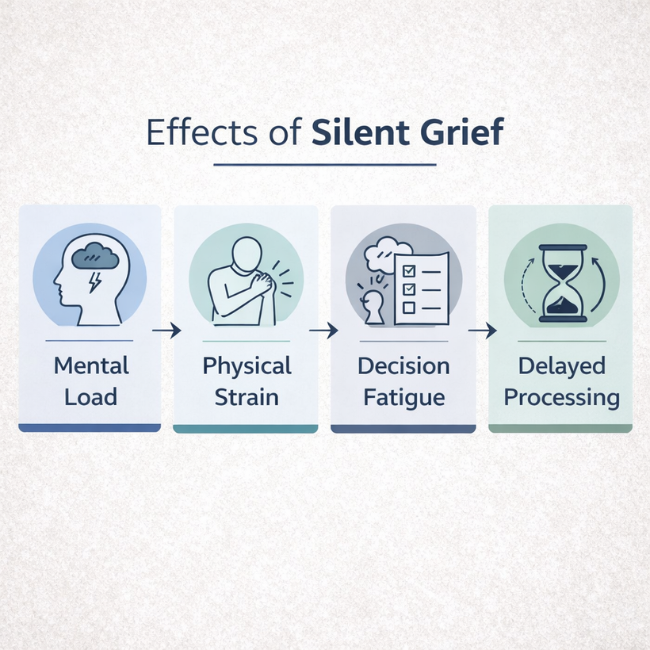
Grieving in silence produces effects that develop gradually.
Cognitive Load
Managing responsibilities while suppressing emotional response increases mental demand. As a result, concentration may require additional effort.
Physical Response
Unprocessed emotional strain may affect sleep patterns and overall energy levels.
Decision Fatigue
Ongoing responsibility can reduce the ability to evaluate decisions over time. Therefore, choices may take longer or feel more difficult.
Delayed Emotional Processing
When emotional response is postponed, it remains present. It may surface later, often after responsibilities have been completed.
Responsibilities to Beneficiaries
The role often includes responsibilities to beneficiaries, which must be handled with accuracy and structure.
These responsibilities may involve:
- maintaining clear communication
- managing expectations
- ensuring proper documentation
- following established procedures
However, while these responsibilities are necessary, they can increase pressure when combined with personal loss.
Conditions That Reinforce Grieving in Silence
Several conditions contribute to this experience.
Continuous Administrative Demands
Responsibilities follow defined timelines. These timelines continue regardless of emotional readiness.
External Expectations
Others may focus on outcomes and progress. As a result, attention shifts toward results rather than personal capacity.
Limited Acknowledgment
Consistent performance may lead others to assume that emotional impact is minimal.
Role Continuity
Once responsibility is assumed, it tends to continue throughout the process. Therefore, opportunities to step back may be limited.
Responsibilities Checklist for Structured Oversight
A structured approach can support consistency while reducing unnecessary strain.
A basic responsibilities checklist may include:
- document review
- asset identification
- communication tracking
- deadline monitoring
In addition, maintaining structure can reduce uncertainty and support clearer decision-making.
To see how these responsibilities are typically organized, see The Executor’s Checklist: Essential Duties for Managing Probate with Confidence
Managing Grieving in Silence
A structured approach can help balance responsibilities and internal capacity.
Step 1: Recognize Dual Demands
Both responsibility and emotional response exist at the same time.
Step 2: Separate Tasks From Reflection
Set defined periods for responsibilities and separate time for personal processing.
Step 3: Maintain Clarity
Clear understanding of responsibilities reduces unnecessary strain.
Step 4: Monitor Capacity
Observe changes in focus, energy, and decision-making ability over time.
Conclusion
Grieving in silence is shaped by responsibility, structure, and limited acknowledgment. It reflects a condition where emotional response continues alongside ongoing obligations.
Understanding this allows for a clearer view of both the responsibilities being carried and the internal impact that may not be immediately visible.
This article is provided for general informational purposes only and does not constitute legal or financial advice.