
Common errors made by executors and personal representatives that can delay probate, create financial risk, or expose the executor to liability.
Executor mistakes can create serious probate problems when estate responsibilities are handled without a clear understanding of probate rules. Being named executor — also called a personal representative in many states — carries significant responsibility.
Many executor mistakes occur because individuals accept the role without understanding how structured probate administration must be. Probate follows legal procedures and financial order. When executors act too quickly, misunderstand their authority, or fail to maintain proper records, serious problems can arise. Some executor mistakes can delay probate, while others may expose the executor to personal liability.
Avoiding executor mistakes helps ensure that probate administration proceeds according to legal requirements and protects estate assets.
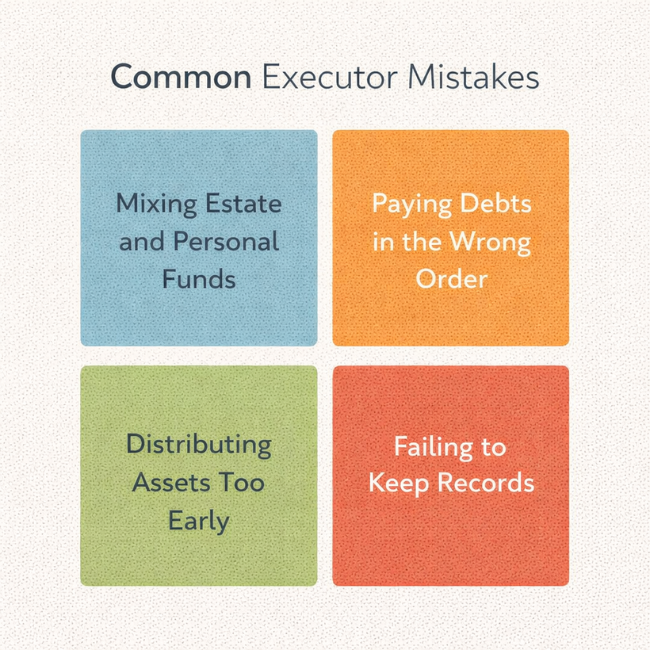
Acting Before Receiving Court Authority
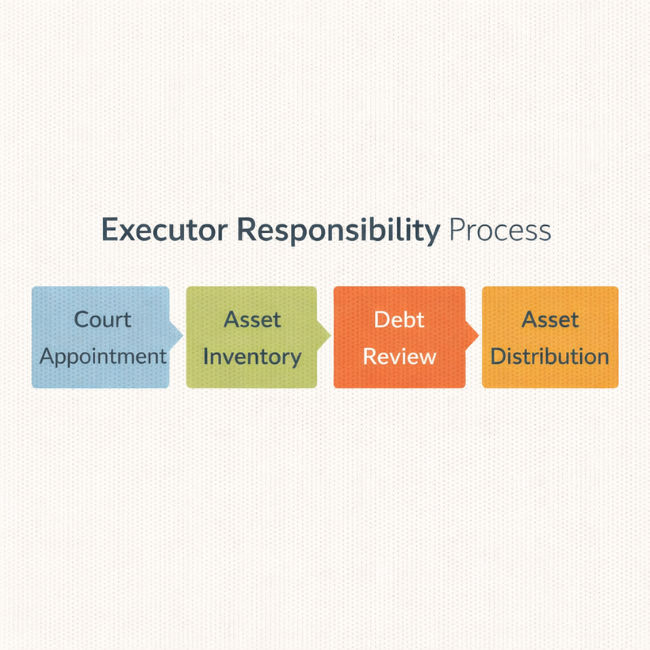
One of the most common executor mistakes occurs at the very beginning of probate administration. Individuals sometimes believe that once they are named in the will, they immediately have authority to manage estate assets. In reality, legal authority usually begins only after the probate court formally appoints the executor.
Until the court issues official documents — often called Letters Testamentary or Letters of Administration — financial institutions and other organizations may not recognize the executor’s authority. Attempting to access accounts, sell property, or transfer assets before receiving court appointment can create legal complications.
Waiting for formal court appointment ensures that the executor’s actions are properly authorized and recognized during the probate process.
Mixing Estate Funds with Personal Funds
Another of the most frequent executor mistakes involves handling estate money improperly. Once probate begins, estate assets must be kept separate from the executor’s personal finances.
Executors typically open a dedicated estate bank account where incoming funds are deposited and payments are made. Mixing estate money with personal accounts — even temporarily — can create confusion and raise questions about how funds were handled.
Proper financial separation helps maintain transparency and allows the executor to demonstrate exactly how estate funds were received and distributed. Maintaining a separate estate account is one of the most important financial responsibilities of an executor.
Paying Debts in the Wrong Order
Some executor mistakes occur when debts are paid in the wrong order during probate administration. However, not all debts are treated the same during probate. Most states follow a structured legal order that determines which obligations must be paid first.
For a detailed explanation, see Which Debts Get Paid First in Probate
If an executor pays debts out of sequence, the estate may run out of funds before higher-priority obligations are satisfied. In certain situations, the executor could even become personally responsible for improper payments.
For this reason, executors must understand how probate law prioritizes creditor claims and estate expenses.
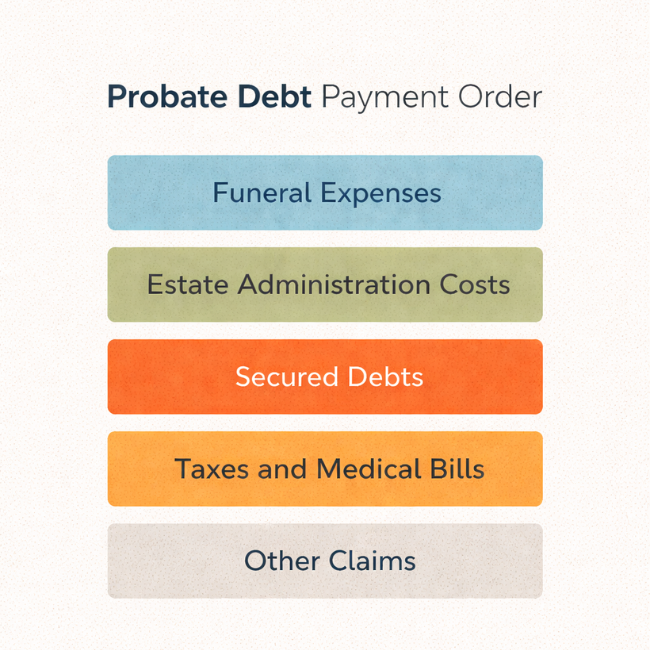
Typical payment categories may include:
- Funeral expenses
- Estate administration costs
- Secured debts
- Taxes and medical bills
- Other creditor claims
Following the proper order helps ensure that estate obligations are addressed according to legal requirements.
Distributing Assets Too Early
Heirs and beneficiaries often expect to receive their inheritance soon after probate begins. While this expectation is understandable, early distribution can create significant risk.
Before distributing estate assets, executors must confirm that:
- All known creditors have been addressed
- Required tax filings are completed
- Estate expenses are paid
- Probate deadlines and waiting periods have passed
If assets are distributed too early and additional debts later appear, the executor may face difficult recovery efforts or legal complications.
Waiting until the appropriate stage of probate helps ensure that distributions occur safely and according to the law.
Failing to Maintain Proper Records
Recordkeeping is another area where executor mistakes frequently occur. Probate administration often involves many financial transactions, including asset transfers, creditor payments, tax filings, and distributions.
Executors are generally expected to maintain clear documentation showing:
- Estate assets identified during probate
- Payments made to creditors
- Administrative expenses
- Distributions to heirs or beneficiaries
Accurate records help demonstrate that the executor acted responsibly and followed probate requirements. Good documentation also makes it easier to respond to questions from the court, heirs, or financial institutions.
Without clear records, misunderstandings can arise and probate proceedings may become more complicated.
Misunderstanding the Scope of Executor Responsibilities
Some executor mistakes arise simply from misunderstanding the role itself. Executors are responsible for managing estate administration, but they are not expected to perform every task alone.
Many probate matters involve specialized knowledge, including legal filings, tax considerations, or property transactions. Executors often work with professionals such as probate attorneys, accountants, and real estate professionals to ensure that each step of the process is handled correctly.
Recognizing when professional guidance is appropriate can help prevent errors and support smoother probate administration.
Why Executor Mistakes Matter
Executor mistakes are not always intentional. In many cases, individuals accept the role with good intentions but limited familiarity with probate procedures. However, even small errors can create delays, financial complications, or disputes among heirs.
Probate is designed to follow a structured legal process. When executors understand their responsibilities and proceed carefully, the estate can be administered in a way that protects assets and respects the legal framework governing inheritance.
Final Thoughts
Serving as an executor or personal representative is an important responsibility that requires careful attention to financial and legal details. Understanding common executor mistakes helps individuals approach probate administration with greater awareness.
By waiting for court authority, maintaining clear financial records, respecting creditor priorities, and following the proper probate timeline, executors can help ensure that estate administration proceeds in an orderly and responsible way.
This content is for general informational purposes only and does not constitute legal or financial advice. Probate laws vary by state. Consult a licensed probate attorney in your jurisdiction before taking action.