





Can an executor sell a house that is in probate depends on court authority, title status, and state procedure. In most cases, an executor, also called a personal representative, may sell real estate during probate if proper legal steps are followed. The authority to sell does not come automatically from the will alone. It comes from court appointment and compliance with state law.
This article explains the legal structure, required approvals, and procedural limits involved when an executor seeks to sell a property during probate.
Definition: Selling Real Estate During Probate
When a person dies owning real estate solely in their name, probate is generally required to transfer legal title. During probate, the court appoints an executor or personal representative to manage estate assets.
Selling real estate during probate means:
- The executor has been formally appointed by the court
- The property is legally part of the probate estate
- The sale complies with state probate statutes
- Required notices and approvals are satisfied
Without formal appointment, no sale can occur.
When Can an Executor Sell a House That Is in Probate
The answer to can an executor sell a house that is in probate depends on four structural conditions:
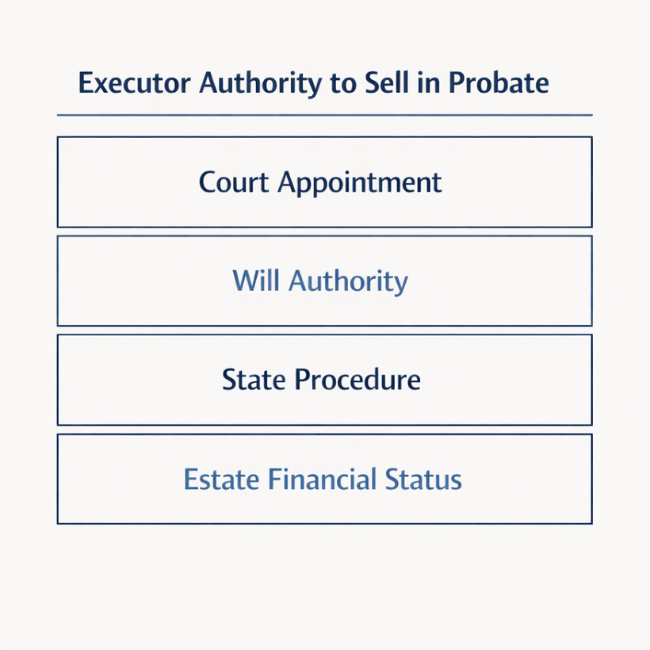
1. Court Appointment
The executor must receive official appointment documents from the probate court. These documents are often called Letters Testamentary or Letters of Administration.
Without these documents, title companies will not permit closing.
2. Authority Granted in the Will
Some wills include language granting the executor authority to sell real estate. If the will provides “power of sale,” court approval may not be required in certain states.
If the will is silent, court approval is often required before listing or accepting an offer.
3. State Probate Procedure
States generally follow one of two models:
- Independent administration (less court supervision)
- Supervised administration (court approval required for major actions)
In supervised estates, the executor may need:
- Court permission before listing
- Court confirmation after accepting an offer
Procedures vary by jurisdiction.
4. Estate Financial Condition
The executor may need to sell real estate to:
- Pay debts
- Cover taxes
- Satisfy administrative expenses
- Equalize distributions among beneficiaries
The executor must act in the best interest of the estate, not individual heirs.
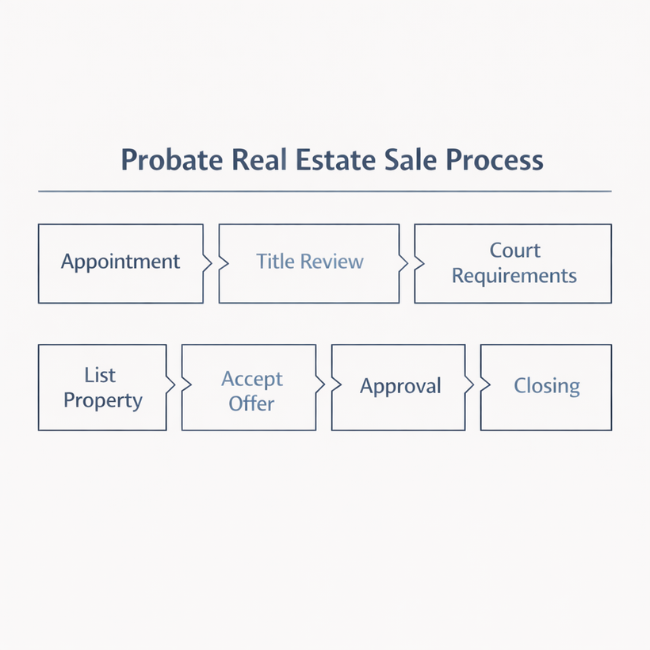
Structured Process for Selling a House in Probate
If authority exists, the typical process follows this sequence.
For a complete breakdown of the legal steps and approval structure, see How to Sell Probate Property: Legal Steps, Authority, and What to Expect
Step 1: Confirm Appointment and Authority
Obtain certified court documents confirming appointment.
Step 2: Verify Title
Ensure the property is titled solely in the deceased person’s name.
Step 3: Determine Court Requirements
Confirm whether court approval is required before listing or closing.
Step 4: List the Property
The executor signs the listing agreement in fiduciary capacity.
Step 5: Accept Offer
Offer must align with fiduciary duty to obtain fair market value.
Step 6: Obtain Court Approval (If Required)
Some states require a petition for confirmation.
Step 7: Close the Sale
Executor signs the deed on behalf of the estate. Proceeds are deposited into the estate account.
Common Misunderstandings
Misunderstanding 1: A Will Automatically Transfers the House
A will does not transfer title. Probate court authority is required before ownership changes.
Misunderstanding 2: Beneficiaries Can Force a Sale Immediately
Beneficiaries do not control estate property during probate. The executor manages assets subject to court supervision and fiduciary duty.
Special Considerations
Multiple Heirs
Disagreement among heirs does not automatically prevent a sale. However, objections may require court resolution.
Mortgages and Liens
Existing loans remain attached to the property. The estate is responsible for payments until closing or other resolution.
Insolvent Estates
If estate debts exceed assets, the executor must follow statutory order of payment before distributing proceeds.
Conclusion
The question can an executor sell a house that is in probate is answered through court authority, statutory procedure, and fiduciary obligation. In most cases, the executor can sell real estate if properly appointed and compliant with state law. The sale must serve the estate’s best interest and follow required approvals.
This content is for general informational purposes only and does not constitute legal or financial advice. Probate laws vary by state. Consult a licensed probate attorney in your jurisdiction before taking action.