





When a person dies, financial obligations do not disappear automatically. Determining which debts get paid first in probate is a structured legal process governed by statutory priority rules. The probate court requires debts to be reviewed, validated, and paid according to an established order.
Executors or personal representatives are responsible for following this order carefully. Paying debts out of sequence can reduce available estate assets and create administrative complications. Understanding how priority works helps ensure the estate is administered correctly.
For a broader understanding of executor duties and responsibilities, see Executor Responsibilities During Probate
Definition: Debt Payment During Probate
Probate is the court-supervised process used to settle the financial obligations of a deceased person before distributing remaining assets.
During probate, the personal representative must:
- Identify creditors
- Review submitted claims
- Verify whether debts are valid
- Pay approved obligations using estate funds
- Follow the statutory priority order
This process ensures that higher-priority obligations are satisfied before lower-priority claims.
Why the Order of Payment Matters
The order of payment in probate protects the estate and ensures legally required obligations are satisfied first.
Creditors often contact the executor soon after death. However, the urgency of a bill does not determine its priority. Some claims may be invalid, expired, or subordinate under probate law.
Paying a lower-priority obligation too early can create shortages that prevent required expenses from being paid later. In some situations, improper payment may expose the executor to personal liability.
Careful review and adherence to statutory order protects both the estate and the executor.
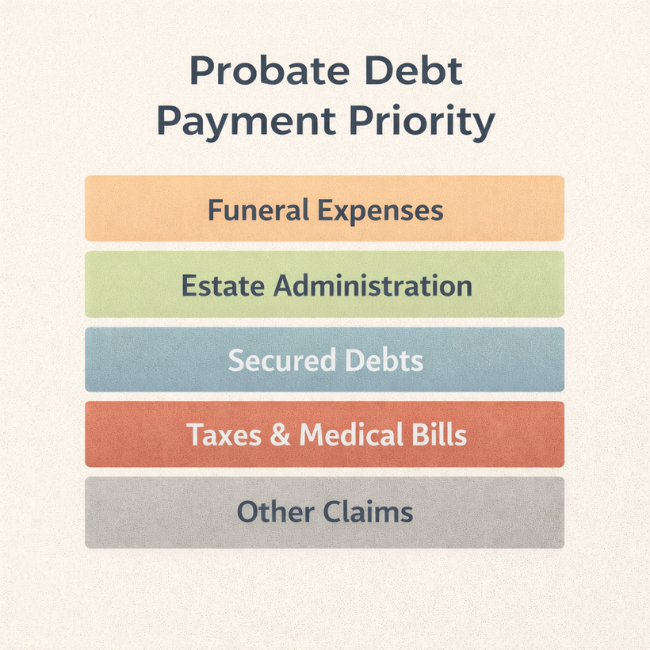
Typical Order of Payment in Probate
Although the exact rules vary by state, most probate systems follow a similar hierarchy for debt payment.
Funeral and Burial Expenses
Reasonable funeral and burial expenses are usually among the first obligations paid. These costs relate directly to final arrangements and are often granted high priority.
Administration Expenses
Expenses required to administer the estate typically come next. These may include:
- court filing costs
- legal services
- executor compensation
- accounting services
- appraisal fees
These expenses support the legal process of administering the estate.
Secured Debts
Secured debts are obligations backed by collateral.
Common examples include:
- mortgages
- vehicle loans
- secured property liens
The collateral associated with these debts generally must be satisfied before unsecured obligations.
Taxes
Taxes owed by the deceased or the estate are usually paid before most unsecured debts. These may include:
- federal income taxes
- state income taxes
- estate taxes where applicable
Failure to address tax obligations can create additional penalties or legal complications.
Final Medical Expenses
Costs associated with the final illness may also receive priority in many jurisdictions.
These expenses may include:
- hospital services
- physician care
- hospice services
- prescription medications
Verification of billing accuracy is important before payment.
Other Valid Unsecured Claims
After higher-priority obligations are satisfied, remaining creditor claims may be reviewed.
Examples include:
- credit cards
- personal loans
- utility bills
- other consumer obligations
These debts are typically paid only if sufficient assets remain in the estate.
Common Mistakes That Reduce Estate Assets
Executors often encounter situations where paying debts prematurely or incorrectly can harm the estate.
Paying Unsecured Debts Too Early
Credit cards and other consumer obligations are usually lower-priority claims. Paying them before higher-priority obligations may create shortages later in the process.
Paying Expired Claims
Many states impose strict deadlines for creditors to file claims. If a creditor misses the statutory filing period, the claim may no longer be enforceable.
Paying such claims unnecessarily reduces estate assets.
Misinterpreting Joint Debts
Some debts may be shared with another borrower or guarantor. In those cases, responsibility may not rest entirely with the estate.
Reviewing the original loan agreement is essential before payment.
Paying Duplicate or Inflated Charges
Billing errors can occur, particularly in medical or service invoices. Executors should review each claim carefully and request corrections when necessary.
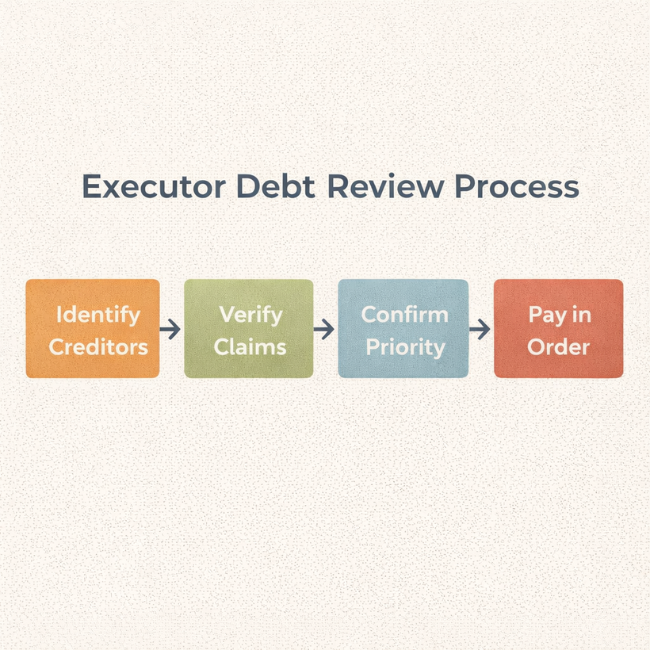
Structured Review Process for Executors
Before paying any debt, executors typically follow a structured review process.
Step 1: Identify All Potential Creditors
Gather statements, correspondence, and records related to possible financial obligations.
Step 2: Confirm Claim Validity
Verify that each creditor claim:
- was filed properly
- meets statutory deadlines
- represents a legitimate obligation
Step 3: Determine Statutory Priority
Compare the claim category with the state’s required payment hierarchy.
Step 4: Pay Approved Claims in Order
Only after verification and classification should payments be made from estate funds.
Quick Answers About Probate Debt Payment
Which debts get paid first in probate?
Priority typically begins with funeral expenses and estate administration costs, followed by secured debts, taxes, and then unsecured claims.
Should credit card debts be paid immediately?
Consumer debts are usually lower-priority claims and should not be paid before verifying the estate’s legal obligations.
Can an executor become personally liable?
Improper handling of estate funds, including paying debts out of order, may expose the executor to legal liability in certain circumstances.
Conclusion
Understanding which debts get paid first in probate is essential for proper estate administration. Probate law establishes a structured order that protects creditors with higher priority while ensuring the estate is distributed according to legal requirements.
Executors who review claims carefully and follow statutory payment order help preserve estate assets and maintain compliance with probate rules.
This content is for general informational purposes only and does not constitute legal or financial advice. Probate laws vary by state. Consult a licensed probate attorney in your jurisdiction before taking action.