





How Is Probate Real Estate Managed?
How is probate real estate managed? Probate real estate is managed through court appointment, verified authority, property valuation, procedural compliance, and lawful handling of sale proceeds. When real estate is owned solely in a deceased person’s name, it usually becomes part of the probate estate and must be administered according to state procedure.
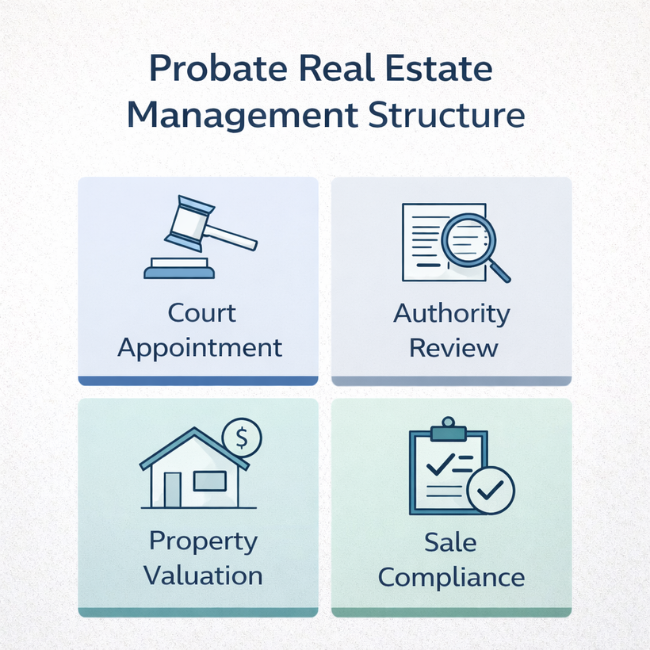
Probate real estate cannot be transferred, listed, or sold based on informal agreement alone. Legal authority must first be established through the probate court. Therefore, the process begins with appointment of a personal representative or executor who is authorized to act on behalf of the estate.
What Probate Real Estate Means
Probate real estate refers to property that does not transfer automatically at death. This usually includes real estate titled solely in the deceased person’s name, without survivorship rights or another transfer structure already in place.
If the property was jointly owned with survivorship rights or held in a trust, probate may not control that asset. However, when sole ownership exists, probate administration is generally required before title can move to heirs or a buyer.
The court-supervised process determines who has authority, what the property is worth, and how the property may be lawfully transferred or sold.
Court Authority in Probate Real Estate Management
The first requirement in determining how probate real estate is managed is court appointment. The personal representative receives official authority through court-issued documents. Without that authority, no person can legally sign documents, transfer title, or complete a sale on behalf of the estate.
In addition, the scope of authority may vary. Some estates allow broader authority once appointment is granted. Others require court approval for major actions. Therefore, authority must be reviewed before any real estate action begins.
If a will exists, the court must recognize it before authority becomes effective. If no will exists, the court appoints an administrator under state procedure.
Why Valuation Is Required
Property valuation is a central part of probate property valuation. Before a property is listed, transferred, or distributed, the estate needs a reliable statement of value.
Valuation may be established through a licensed appraisal, comparative market analysis, or another accepted method. The method used may depend on state requirements and the complexity of the property.
Accurate valuation supports estate inventory, court filings, and financial clarity. It also reduces the risk of disputes and supports proper handling of estate assets.
Probate Real Estate Sale Procedure
Once authority and valuation are confirmed, the estate can move into the probate real estate sale phase. However, probate sales do not always follow the same pattern as standard transactions.
In many cases, the property may be listed only after confirming that state procedure allows the sale. Some jurisdictions require notice periods, court confirmation, or reporting steps before the transaction can be finalized.
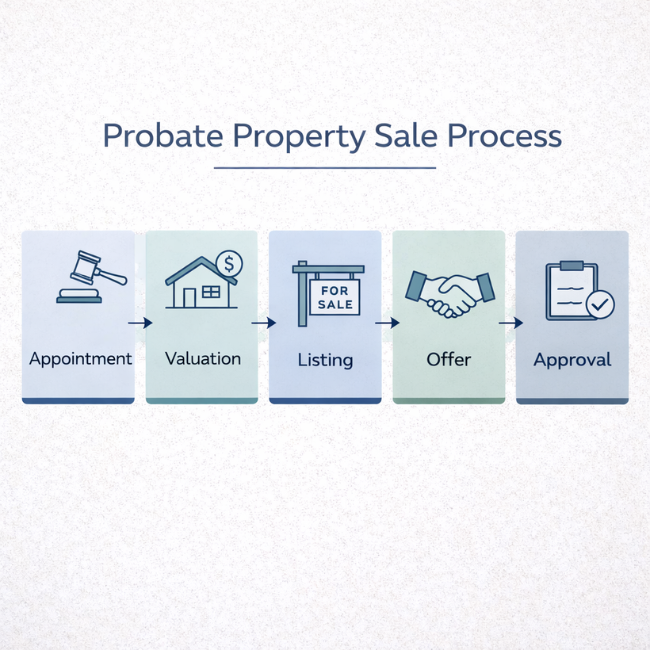
The process typically includes appointment, valuation, listing, offer review, approval if required, and closing. Sale proceeds are then deposited into the estate account.
What Happens to Sale Proceeds
Sale proceeds from probate real estate do not go directly to heirs at closing. Instead, those proceeds become estate funds and are handled through the estate account.
These funds may be used for administrative expenses, court costs, professional fees, taxes, and valid creditor claims. Only after estate obligations are resolved can any remaining amount be distributed according to the will or applicable law.
This is often misunderstood. A completed sale does not mean immediate distribution.
Common Misunderstandings About Managing Probate Property
One misunderstanding is that heirs can authorize the sale on their own. They cannot replace court authority.
Another misunderstanding is that listing the property means full authority exists. In reality, authority depends on probate status and state rules.
A third misunderstanding is that valuation is optional. It is not. Valuation is part of proper estate administration.
A fourth misunderstanding is that sale proceeds belong immediately to heirs. They do not. Estate obligations must be addressed first.
When Probate Real Estate Management Becomes More Complex
Certain situations can increase complexity. Property located in another state may require additional proceedings in that jurisdiction.
If the estate is insolvent, proceeds must be applied according to statutory priority. In such cases, sale proceeds may be used to resolve debts before any distribution.
Disputes among interested parties may also extend the process and require further court involvement.
How is probate real estate managed? It is managed through court appointment, verified authority, required valuation, compliance with sale procedure, and structured handling of proceeds.
Each step follows a defined order. Authority comes first, valuation follows, and sale occurs within procedural limits. This structure governs how probate real estate is administered.
Audio Briefing
This content is for informational purposes only and does not constitute legal or financial advice. Consult a licensed professional in your state.